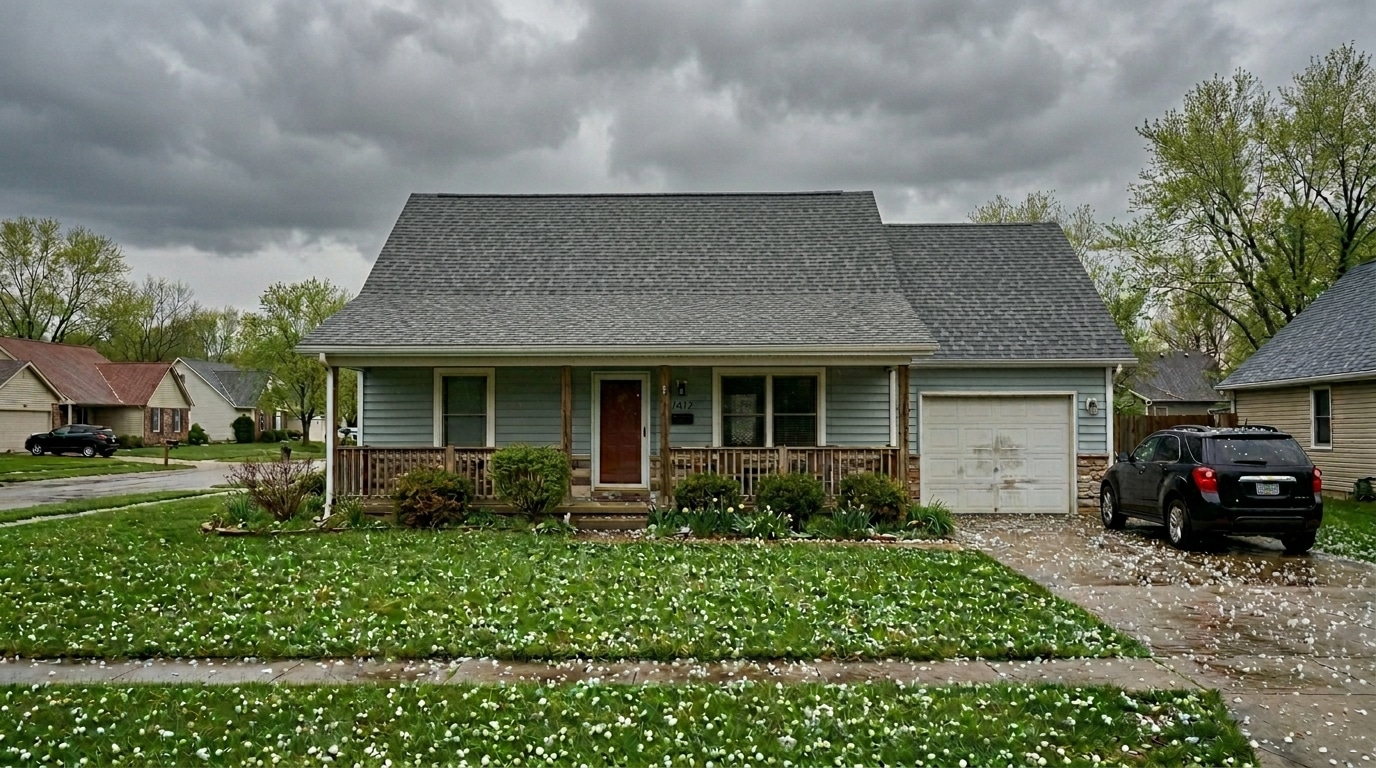
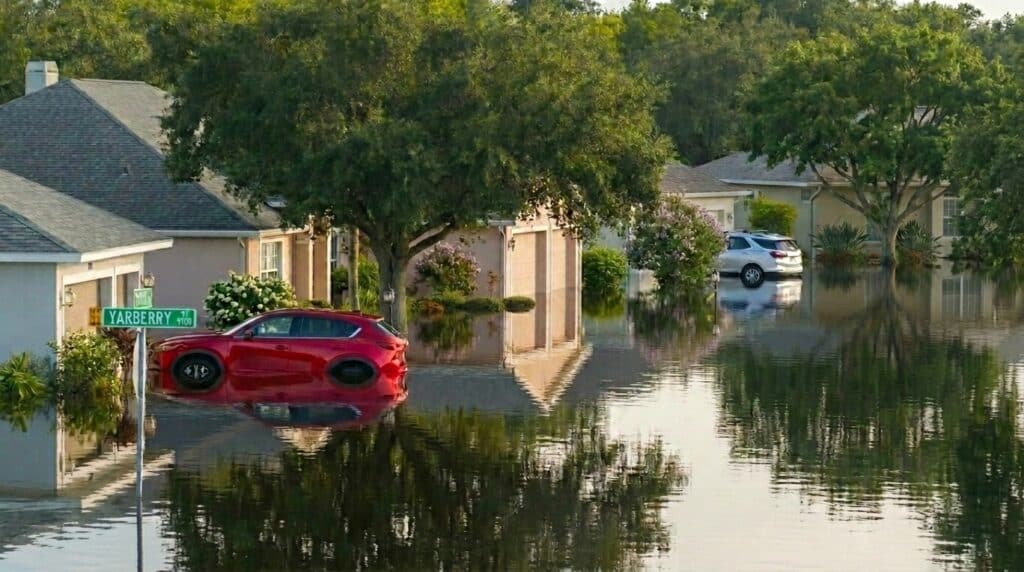
Indiana has more than 2.5 million households, but only about 15,939 carry an active flood insurance policy. That’s roughly 1% of the state, and flood insurance myths for Indiana homeowners are a significant part of why. If you’re looking for a foundational overview of whether you need flood coverage at all, our companion post Do I Really Need Flood Insurance in Indiana? covers that ground. This post goes deeper into the specific misconceptions that leave most Hoosier households unprotected.
Key Takeaways
- Standard homeowners insurance policies exclude flood damage entirely. A separate flood insurance policy is always required, regardless of your flood zone designation.
- Approximately 20% of flood insurance claims nationally come from outside high-risk flood zones. Low-risk does not mean no risk.
- The NFIP is not your only flood insurance option. Private flood insurance has grown substantially and may offer higher limits, shorter waiting periods, or better basement coverage, depending on your situation.
- NFIP basement coverage is limited to structural and mechanical components. Personal belongings, finished improvements, and most contents stored in a basement are largely not covered, even with a separate contents policy.
- The NFIP requires a 30-day waiting period before coverage takes effect. You cannot buy a policy when a storm is approaching and expect immediate protection.
- Indiana experienced 64 flooding or heavy rain events in 2024 alone. The state has paid out $281 million in NFIP claims since 1980.
Myth 1: Your Homeowners Insurance Policy Covers Flooding
Standard homeowners insurance does not cover flood damage. This is the most common and most financially damaging misconception in the flood insurance conversation, and it isn’t buried in the fine print: flooding is explicitly listed as an exclusion in every standard homeowners policy.
The confusion often comes from the fact that homeowners policies do cover some water damage: a burst pipe, a leaking appliance, or sudden interior water intrusion from a roof opening. But water that enters your home from the ground up as a result of flooding is a different category entirely. The homeowners insurance exclusions post walks through what a standard policy covers and what it doesn’t, which is worth reading if you’re not sure where your current coverage ends.
To be protected against flood loss, you need a standalone flood insurance policy, either through the National Flood Insurance Program (NFIP) or a private flood insurer. This is true regardless of your flood zone, your lender’s requirements, or how long you’ve owned your home.
Myth 2: You Only Need Flood Insurance If You’re in a High-Risk Flood Zone
Flood risk doesn’t stop at the edge of a designated Special Flood Hazard Area (SFHA). High-risk zones get most of the attention because lenders require flood insurance for properties in them, but those boundaries reflect where FEMA has calculated elevated risk. They aren’t a guarantee that flood damage won’t occur outside them.
The numbers make the case clearly: roughly 20% of flood insurance claims nationally come from properties outside high-risk flood zones. The Indiana Department of Insurance cites that figure specifically to caution Hoosier homeowners against false confidence from their zone designation.
Indiana’s geography reinforces the point. The state sits in the Ohio River corridor, and its flat terrain allows water to spread quickly across large areas during heavy rainfall. Southern Indiana in particular has seen repeated flooding in communities that wouldn’t be labeled high-risk on a FEMA map. The FEMA flood zones post explains how to look up your zone designation and what the different classifications mean, which is useful context for understanding your actual exposure. Our guide to insuring against natural disasters in Indiana puts flooding in the broader context of disaster coverage for Indiana homeowners.
A flood insurance policy is available to any homeowner in a participating NFIP community, regardless of flood zone. For most Indiana households, coverage is accessible. It’s just going unclaimed.
Myth 3: You Can Only Buy Flood Insurance Through the NFIP
The NFIP is the most widely recognized source of flood insurance in the country, and it’s a legitimate option for many homeowners. But it isn’t the only one, and whether it’s the right fit depends on your property, your basement situation, and your coverage priorities.
Private flood insurance has grown into a real, established market. Private insurers wrote $730 million in net premiums in 2024, and of homeowners who identified as being at flood risk, 35% chose private flood insurance compared to 43% through the NFIP (2023 Triple-I/Munich Re survey).
Here’s how the two options compare on the factors that matter most to homeowners:
- Coverage limits: NFIP provides up to $250,000 for building structure and up to $100,000 for personal property/contents, purchased separately. Private flood limits vary by insurer and can exceed NFIP caps, which matters for higher-value homes.
- Waiting period: NFIP requires a standard 30-day waiting period before coverage takes effect. Private flood policies often have shorter waiting periods, though terms vary by insurer.
- Basement coverage: NFIP basement coverage is strictly limited to structural and mechanical components (see Myth 4). Private flood policies may offer broader basement coverage, though this varies significantly by policy and carrier.
- Contents valuation: NFIP pays contents claims at actual cash value, which accounts for depreciation. Some private flood policies offer replacement cost coverage for contents, which can make a meaningful difference in what a claim actually pays.
Neither option is universally better. The right choice depends on your home’s value, flood zone, basement situation, and coverage priorities. As an independent agency, Torian can compare NFIP and private flood options across carriers on your behalf, without being tied to a single program.
Myth 4: Flood Insurance Covers Everything in My Basement
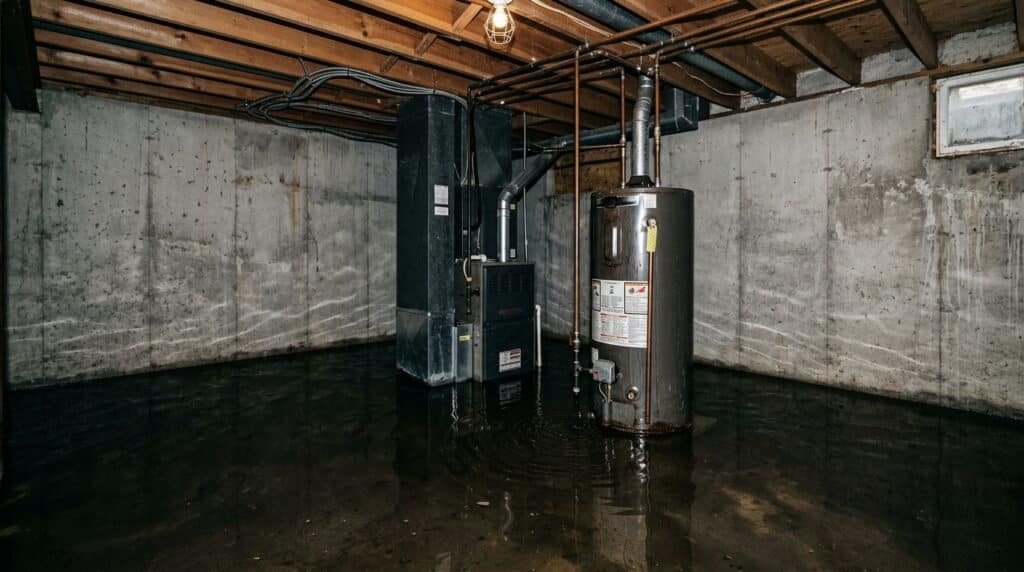
NFIP flood insurance does not cover most basement contents or finished improvements. Coverage under an NFIP building policy is limited to structural and mechanical components: the foundation, furnace, water heater, and circuit breakers. Personal belongings, finished basement improvements, and most contents stored below grade are largely excluded. The FEMA FAQ on flood insurance coverage for basement contents covers what the NFIP does and doesn’t protect below grade, and in Indiana, where basements are a standard part of the housing stock, the limitations matter.
Under NFIP rules, covered and excluded basement items break down like this:
What NFIP building coverage includes in a basement (structural and mechanical items):
- Foundation elements
- Furnace, water heater, and heat pump
- Electrical junction boxes and circuit breakers
- Sump pumps
- Fuel tanks, well water tanks, and pumps
What is NOT covered under NFIP, even with a separate contents policy:
- Personal belongings stored in the basement, including clothing, electronics, and furniture
- Finished basement improvements: drywall, carpet, cabinetry, and similar enhancements
- Washer, dryer, and portable air conditioners (covered under a contents policy only if purchased, but basement contents remain significantly restricted even then)
- Food freezers and the food inside them, covered under contents only if a contents policy is in place
What this means in practice: if you’ve finished your basement, filled it with appliances and stored valuables, and assumed your NFIP policy has it covered, you’re likely looking at a significant gap when floodwater reaches that level. Private flood insurance may offer broader basement protection. If your home has a finished basement or significant stored contents below grade, it’s worth asking an agent to compare your options.
Myth 5: I Can Always Buy Flood Insurance When a Storm Is Coming
You cannot buy a flood insurance policy when a storm is approaching and have it take effect before the storm arrives. The NFIP requires a standard 30-day waiting period after purchase before coverage goes into effect. There is no exception for incoming weather.
The one exception to that rule: flood insurance purchased at the time of a mortgage closing on a newly purchased home can take effect immediately. For everyone else, the 30-day waiting period applies without exception.
Indiana experienced 64 flooding or heavy rain events in 2024 alone. The time to evaluate your flood coverage is before a forecast appears, not after one does.
How Torian Insurance Helps
Flood insurance isn’t one-size-fits-all. The options, between NFIP, private flood, contents coverage, basement considerations, and waiting period rules, can get complicated quickly. We help homeowners in Evansville and throughout the tri-state area sort through those options and find coverage that genuinely fits their situation.
As an independent agency, we’re not limited to a single carrier or program. That means we can compare NFIP and private flood insurance side by side for your specific home, walk through what each policy actually covers and excludes, and help you identify gaps before a flood makes them obvious. We’ve been doing that for Indiana families since 1923, and independent means we work for our clients, not for an insurance company.
Whether you’re starting from scratch or reviewing a policy you already have, the team at Torian Insurance can walk through your flood coverage options and help you find the right fit.
Frequently Asked Questions About Flood Insurance Myths
Does flood insurance cover a finished basement?
Under the NFIP, finished basement improvements, including drywall, carpet, and cabinetry, are generally not covered. NFIP basement coverage is limited to structural and mechanical components: the foundation, furnace, water heater, and circuit breakers. Personal contents and finished improvements in a basement are not covered under NFIP, even with a separate contents policy. Private flood insurance policies may offer broader basement coverage, so it’s worth comparing both options if your home has a finished basement.
Do I need flood insurance if I’m in flood zone X?
Flood zone X is a moderate- or low-risk designation by FEMA, meaning the property falls outside a Special Flood Hazard Area. But low-risk doesn’t mean no risk. Nationally, about 20% of flood insurance claims come from outside high-risk flood zones. Indiana’s flat terrain and recurring rainfall patterns mean flooding regularly occurs in areas without a high-risk map designation. Flood insurance is available in zone X and worth considering, especially in Southern Indiana.
What’s the difference between NFIP and private flood insurance?
Both cover flood damage to your home and belongings, but they differ on several key points. NFIP coverage is capped at $250,000 for structure and $100,000 for contents, has a standard 30-day waiting period, pays contents claims at actual cash value, and has strict limitations on basement coverage. Private flood insurance may offer higher limits, shorter waiting periods, replacement cost contents coverage, and broader basement protection, though specifics vary by policy and carrier. An independent agent can compare the two options based on your property, zone, and coverage needs.
Is federal disaster assistance the same as flood insurance?
No, and this distinction matters. Federal disaster assistance is not automatically triggered by a flood event. It requires a presidential disaster declaration. When assistance is available, it typically comes as an SBA disaster loan, not a grant, and it doesn’t cover the same scope of losses as a flood insurance policy. FloodSmart, the NFIP’s consumer resource, notes that most recipients find assistance covers a fraction of the actual recovery cost.
How much does flood insurance cost in Indiana?
NFIP flood insurance rates vary based on property location, flood zone, building characteristics, and elevation, so there’s no single Indiana-wide premium. What’s clearer is the cost of not having it: FEMA estimates that one inch of water in a home can cause more than $25,000 in damage. Indiana has recorded $281 million in NFIP claims paid since 1980, across a state where fewer than 16,000 households carry a policy. The best way to know what flood coverage would actually cost for your home is to get a quote from an agent who can compare NFIP and private flood options side by side.

The Coverage Gap Is Real: Don’t Wait for a Flood to Find Out
Most Indiana homeowners assume flood risk is someone else’s problem. But fewer than 16,000 active policies across a state of 2.5 million households tells a different story. The myths outlined above are contributing to a coverage gap that affects the vast majority of Indiana families.
If you’ve worked through these myths and aren’t sure whether your current coverage actually protects you, the team at Torian Insurance can help. We work with homeowners across Evansville and the tri-state area to compare NFIP and private flood options and find coverage that fits. Contact us to talk with a local agent.