
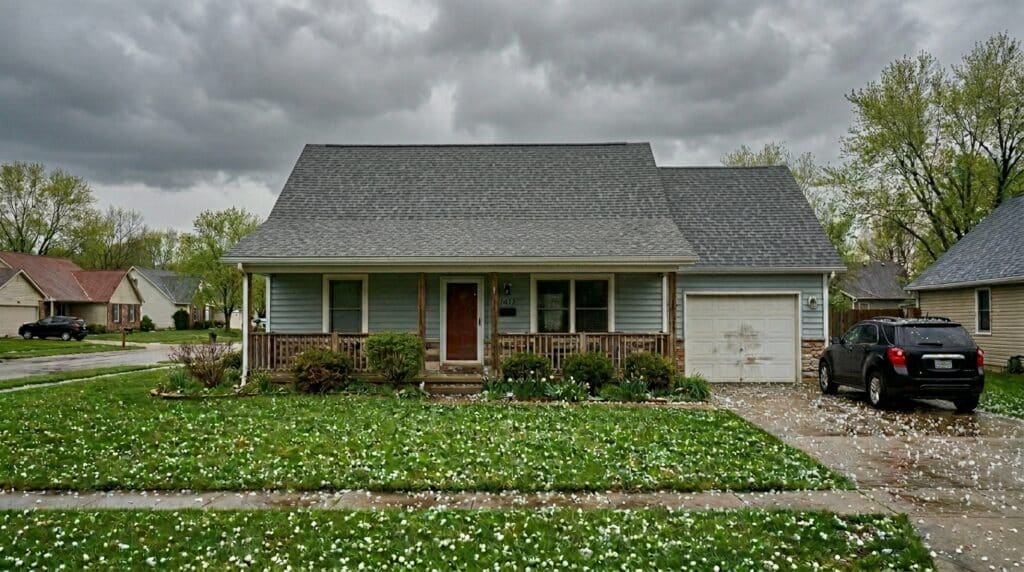
Indiana homeowners carry a specific combination of weather risks: tornadoes and hail in spring and summer, ice and snow loads in winter, and Ohio River basin flooding for properties in low-lying areas. Those risks are priced into your insurance premium. Targeted home improvements can lower home insurance costs in Indiana, and in many cases, the savings appear at your next renewal.
Key Takeaways
- Wind and hail account for 42.5% of all homeowners insurance losses nationally, making roof and exterior upgrades the highest-ROI category for Indiana homeowners seeking to reduce their premium.
- Class 4 impact-resistant shingles carry the highest hail resistance rating and qualify for premium discounts with many carriers; the actual discount range varies by carrier and should be confirmed with your agent before you choose a product.
- Storm shutters and impact-resistant windows and doors are recognized by the Insurance Information Institute (III) as discount-eligible improvements with many carriers.
- Sump pump installation with battery backup reduces freeze and water intrusion risk and may qualify for a carrier discount, depending on your policy.
- Indiana’s standard homeowners policy covers wind, wind-driven rain, and structural collapse from ice or snow weight, but interior water damage without accompanying roof or wall damage is generally not covered.
- Documenting every upgrade with receipts, product specification sheets, and photos gives your agent the information needed to shop for the best available discount across carriers.
Why Indiana’s Weather Profile Makes Upgrades Worth the Investment
Indiana sits squarely in a weather risk zone that many homeowners underestimate. The state lies in tornado alley’s eastern corridor, and hail events that damage roofs are common across the Evansville metro and Southern Indiana broadly. Those risks translate directly into how carriers price your policy.
Indiana weather claim data at a glance:
|
Before making any upgrades, it helps to understand what your policy already covers. Standard Indiana homeowners policies typically cover wind, wind-driven rain, falling objects, and structural collapse from ice or snow weight. Interior water intrusion from a storm without roof or wall damage is generally not covered, and frozen pipe damage from a homeowner’s failure to maintain adequate heat may not be covered either.
Knowing those boundaries helps you prioritize the upgrades that address your highest-risk scenarios. For more on policy scope, see Torian’s guide to homeowners insurance exclusions.
Roof Upgrades: The Highest-Impact Improvement for Indiana Homeowners
Roofing is the single most impactful upgrade category for reducing homeowners insurance premiums. Carriers weight roofing material, age, and condition heavily because the roof is a home’s primary defense against the wind and hail events Indiana experiences most often. A new roof with impact-resistant materials typically produces the largest individual premium effect of any single home improvement.
Impact-Resistant Shingles: Class 3 and Class 4
Standard asphalt shingles and impact-resistant shingles are not interchangeable products. The insurance industry uses the UL 2218 test to rate shingle impact resistance on a scale from Class 1 (lowest) to Class 4 (highest).
Class 4 shingles are the highest-rated option, designed to withstand hail up to 2 inches in diameter without cracking. Class 3 shingles provide a meaningful step up from standard products but are one tier below Class 4. Many carriers offer explicit discounts for Class 3 or Class 4 shingles because the material directly reduces the probability of a hail claim.
According to the Insurance Information Institute, many insurers reward homeowners who install impact-resistant roofing with a premium discount, though the savings vary based on your state, insurer, and whether the work is verified. Before replacing your roof, ask your agent which shingle classification your carriers recognize and whether upgrading would change your premium at renewal.
Full Roof Replacement vs. Spot Repairs
A full roof replacement generally carries more weight with carriers than patching damaged sections. If your roof is aging, a full replacement with quality materials is more likely to trigger a discount than repairs that preserve an aging deck.
Keep all contractor invoices, product specification sheets showing the UL 2218 rating, and installation photos. Most carriers require this documentation before applying a discount. Submitting it promptly after installation, rather than waiting for renewal, can accelerate when the credit takes effect.
Wind and Storm Upgrades Beyond the Roof
The roof receives most of the attention in conversations about home insurance discounts, but carriers also recognize other exterior improvements that reduce wind and storm damage exposure. These are particularly relevant for Indiana homeowners in tornado and severe thunderstorm corridors.
Storm Shutters and Impact-Resistant Windows
Storm shutters are a recognized discount trigger with many carriers. The Insurance Information Institute notes that insurers and mitigation programs reward homeowners who add storm shutters and install impact-resistant roofing, because these improvements directly reduce the likelihood of weather-related claims. Impact-resistant windows and glass doors may qualify for similar treatment depending on your policy and carrier.
In Southern Indiana, severe thunderstorms and straight-line wind events can cause as much damage as named storm events further south. Shutters and impact-resistant glazing protect openings vulnerable to windborne debris and pressure changes during high-wind conditions. If you’re already planning a window replacement, asking your agent whether the upgrade qualifies for a discount before you select a product costs nothing.
Reinforced Garage Doors
Garage doors are a frequently overlooked failure point during high-wind events. A garage door that fails during a storm allows pressure to build inside the structure, which can compromise the roof from beneath. Reinforced garage doors rated for higher wind loads reduce that risk. Not all carriers offer a named discount for this upgrade, but it’s worth asking your agent, particularly if you’re in a location with consistent severe weather exposure.
Winter Weather Upgrades That Reduce Freeze and Ice Damage Risk
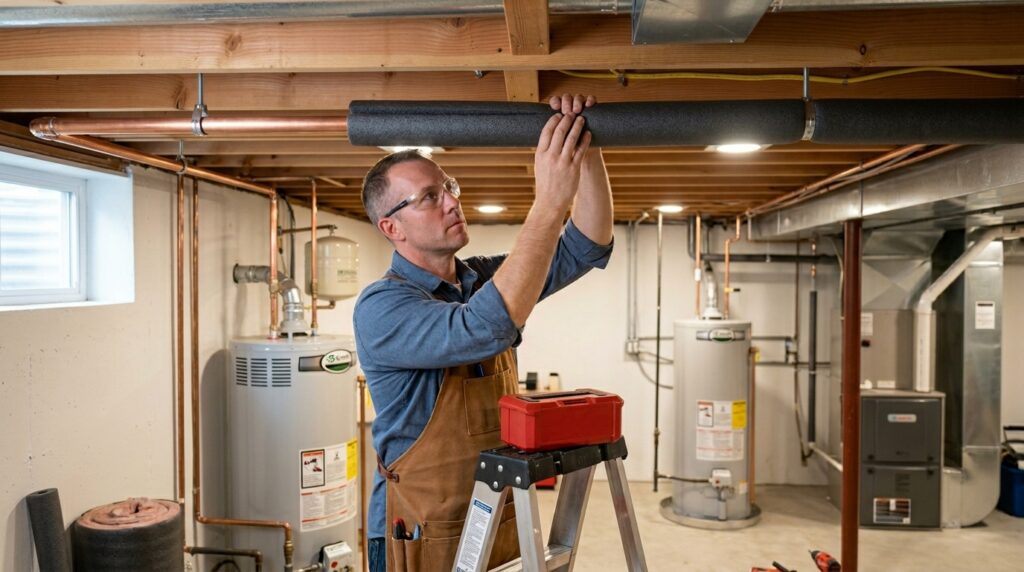
Winter claims tend to be expensive and often preventable. Indiana winters bring freeze-thaw cycles that stress plumbing, roofing edges, and drainage systems in ways that compound over time. Some targeted upgrades are recognized directly by carriers; others reduce the underlying risk that influences how your home is priced over time. For additional context on seasonal risks, see Torian’s winter storm preparation guide.
Sump Pump Installation With Battery Backup
A sump pump in a basement that doesn’t currently have one is one of the more practical upgrades for Southern Indiana homeowners. The Ohio River basin creates elevated groundwater pressure during wet winters and spring snowmelt periods, and a functioning sump pump actively manages that water before it becomes a claim. A battery backup system keeps the pump running during the power outages that commonly accompany winter storms.
Carriers vary on whether they offer a specific discount for sump pump installation, but many factor documented water management systems into their overall risk assessment. Talk with your agent before installation so you understand what documentation to collect and whether your carrier offers any premium credit for the improvement.
Pipe Insulation and Preventing Frozen Pipe Claims
Uninsulated pipes in exterior walls, crawl spaces, and unheated garages are a real claim risk in Southern Indiana winters. Adding pipe insulation and heat tape on vulnerable runs is a relatively low-cost improvement that reduces the likelihood of a frozen pipe burst. This type of upgrade is less likely to generate a specific named discount on its own, but it reduces the water damage exposure that influences how carriers assess overall property risk over time.
It also aligns with Indiana Department of Insurance (IDOI) guidance: standard Indiana policies may not cover frozen pipe damage if it results from a homeowner failing to adequately heat the home. Proper insulation protects both your home and your claim eligibility.
Attic Insulation and Ice Dam Prevention
Ice dams form when heat escapes through an under-insulated attic, melts snow on the roof deck, and the meltwater refreezes at the cold eaves. The buildup eventually forces water back under shingles, causing interior water damage that can be difficult to trace and time-consuming to repair. Adequate attic insulation prevents the heat loss that creates that cycle.
This upgrade may not generate a specific named carrier discount, but it protects your roof system and prevents a category of water damage that sits in the overlap between what policies cover and what they don’t. A well-insulated attic also reduces heating costs, making it one of the more double-duty investments available to Indiana homeowners.
The FORTIFIED Home Program: Maximum Discount Potential
For homeowners planning a comprehensive exterior renovation, the IBHS FORTIFIED Home program offers a structured path to the highest level of weather-resistance certification. Homes that achieve FORTIFIED designation are built or upgraded to standards that exceed typical code requirements, including specific requirements for roof-to-wall connections, roof deck sheathing, and opening protection.
According to the Insurance Institute for Business and Home Safety (IBHS), homes that achieve FORTIFIED certification may qualify for insurance discounts, grants, and tax credits. Indiana carriers vary on whether they offer FORTIFIED-specific discounts. This is best confirmed directly with your agent before committing to the certification process.
FORTIFIED is most cost-effective when incorporated into a full renovation or new build, where the incremental cost of meeting the standard is lower than retrofitting an existing structure. If you’re already replacing your roof and exterior openings, asking your agent whether FORTIFIED designation would affect your premium is a worthwhile conversation to have before work begins.
How to Document Upgrades for Maximum Carrier Credit
To document a home improvement for a potential insurance discount, collect contractor invoices, product specification sheets, installation photos, and any warranty documentation. These are the materials most carriers require before applying a credit to your policy. Your agent needs this information on file before they can act.
For each upgrade, gather:
- Contractor invoices showing the company name, materials installed, and installation date
- Product specification sheets (especially for roofing materials; include the UL 2218 classification if applicable)
- Before and after photos of the upgraded area
- Manufacturer warranty documentation when applicable
Don’t wait until your next renewal to submit documentation. Contact your agent as soon as the work is complete. Some carriers can process a mid-term review and apply the discount before the policy renews.
If you’re planning a major upgrade and aren’t sure which documentation your carrier requires, your independent agent can get that answer before work begins. See also Torian’s post on actual cash value vs. replacement cost, which covers how keeping your home structurally current also affects your dwelling coverage adequacy, not just your premium.
How Torian Insurance Helps
As an independent insurance agency, we shop your policy across multiple carriers, including Acuity, Chubb, Cincinnati Insurance, Hanover, and Philadelphia, to find which ones recognize the specific upgrades you’ve made or plan to make. Not every carrier offers the same discounts for the same improvements, and the differences can be meaningful depending on what you’ve invested in your home.
When you complete a significant upgrade, whether that’s a new impact-resistant roof, storm shutters, or a sump pump system with battery backup, our team can review your current policy and compare it against the carriers that reward those improvements. We can also help you understand what documentation each carrier requires before a discount applies, so you don’t leave savings on the table after work you’ve already paid for.
Torian has served Indiana, Kentucky, and Illinois homeowners since 1923. If you’re planning an upgrade and want to know how it might affect your premium, or if you’d like to review your current coverage, we’re glad to help. Learn more about your home insurance options or read more about insuring against natural disasters in Indiana.

Frequently Asked Questions About Home Improvements and Indiana Home Insurance
Does a new roof lower home insurance in Indiana?
A new roof can lower your homeowners insurance premium in Indiana, but the discount depends on the material, the carrier, and the condition of the previous roof. Carriers generally differentiate between standard asphalt shingles and Class 3 or Class 4 impact-resistant products. A Class 4 roof typically produces a larger discount than standard shingles because it directly reduces hail claim probability. Ask your agent which carriers in your area recognize the specific product you’re considering before you finalize your roofing choice.
What is a Class 4 impact-resistant shingle?
Class 4 is the highest rating in the UL 2218 impact resistance test for roofing materials. A Class 4 shingle is designed to withstand hail up to 2 inches in diameter without cracking or penetrating. Insurance carriers recognize this rating as a meaningful risk reducer for homes in hail-prone areas like Southern Indiana, and many offer premium discounts specifically for Class 4 products. You can confirm the rating on any product’s specification sheet before installation.
Should I notify my insurance company after making home improvements?
Yes, and as soon as possible after the work is complete. Carriers can only apply discounts for improvements they know about, and most require documentation before adjusting your premium. Submit receipts, product specification sheets, and photos to your agent promptly rather than waiting for your next renewal. Notifying your agent also ensures your dwelling coverage reflects the improved condition of your home.
Does a sump pump affect home insurance in Indiana?
It can. Sump pumps reduce the risk of basement water intrusion, which carriers view as a favorable improvement for homes in areas with elevated groundwater pressure or flooding history. Whether a specific premium discount applies depends on your carrier and policy. Ask your agent before installation so you know what documentation to collect and whether your carrier credits the improvement.
What home upgrades qualify for homeowners insurance discounts in Indiana?
The upgrades most commonly recognized by Indiana carriers include:
- A new roof with Class 3 or Class 4 impact-resistant shingles
- Storm shutters or impact-resistant windows and doors
- A reinforced garage door rated for higher wind loads
- A monitored home security or smoke/fire detection system
- Water management systems, such as a sump pump with battery backup
The specific discounts available depend on your carrier. Working with an independent agent who can compare policies across multiple carriers helps ensure you’re getting credit for the improvements you’ve made.
Ready to Put Your Home Improvements to Work on Your Premium?
Weather-resistant upgrades are one of the most direct ways Indiana homeowners can influence their insurance premium over time. Indiana’s severe weather profile, combined with carrier recognition of specific risk-reducing improvements, makes this an area worth prioritizing before your next renewal. The right upgrades, properly documented and placed with the right carrier, can produce meaningful long-term savings alongside a better-protected home.
Have questions about your coverage or want to know how a planned upgrade might affect your premium? Contact Torian Insurance to talk with a local agent. The Torian team can identify which carriers reward the improvements you’re making, confirm your documentation is in order, and review your coverage to make sure it reflects your home’s current value and condition.