From October through December, Indiana’s rural roads fill with deer on the move, and a single strike can wreck a front end in seconds. If you hit a deer, whether your insurance pays depends on the coverage you carry, and the answer changes the moment you swerve to miss it. This guide covers what is and isn’t covered, which deductible applies, and what to do at the scene.
Key Takeaways
- Hitting a deer is a comprehensive claim (“other than collision”) on most personal auto policies, so your comprehensive coverage and comprehensive deductible apply, not collision.
- Swerving changes everything. Miss the deer and hit a tree, ditch, guardrail, or another vehicle, and it typically becomes a collision claim with your collision deductible.
- Liability-only coverage does not pay to repair your own car after a deer strike. Only comprehensive coverage does.
- Nationally, animal-strike claims peak in November at more than three times the August rate, so a pre-season coverage check pays off before the October to December rut.
- Indiana’s advice is to brake, not swerve. State troopers and the DNR warn that drivers who swerve often lose control and hit something worse than the deer.
Does Car Insurance Cover Hitting a Deer?
Yes, if you carry comprehensive coverage. On most personal auto policies, hitting a deer falls under comprehensive coverage, the part of your policy that pays for damage not caused by a collision, including impact by an animal. You pay your comprehensive deductible, and your carrier covers the rest up to your limits.
Comprehensive is the “other than collision” side of your policy. Alongside animal strikes, it typically covers:
- Theft
- Hail, windstorm, and flood
- Fire
Is Hitting a Deer Comprehensive or Collision?
Hitting the deer is comprehensive. Swerving and hitting something else is collision. That single distinction decides which coverage pays and which deductible you owe. The table below shows how seven common deer-season scenarios break down, based on how most personal auto policies handle animal strikes.
| What happened | Coverage that typically responds | Deductible | Source |
|---|---|---|---|
| Your car hits the deer | Comprehensive (“other than collision”) | Comprehensive deductible | NAIC, III |
| You swerve, miss the deer, and hit a tree, guardrail, or ditch, or you roll over | Collision | Collision deductible | NAIC |
| You swerve into another vehicle | Collision for your car; property damage liability for the other car if you are found responsible | Collision deductible on your car | NAIC |
| You carry liability only and hit the deer | No coverage for damage to your own car | Not applicable | NAIC |
| You or your passengers are hurt | Medical payments coverage, if carried | Per policy | NAIC |
| Your car cannot be driven | Roadside or towing and rental coverage, if added | Per policy | NAIC |
| A financed car is totaled and you owe more than it is worth | Comprehensive if you hit the deer, collision if you swerved and hit something else. Either pays the car’s value; GAP covers the remaining loan balance, if purchased | Comprehensive or collision deductible, depending on the cause of loss | NAIC |
Coverage depends on your policy language; this reflects how most personal auto policies work.
What you actually hit is the deciding factor, so the claim can turn on a split-second reaction. For the full breakdown of how the two coverages differ, see our guide to comprehensive vs. collision coverage.
Injuries to you or your passengers are separate, falling under medical payments coverage if you carry it. Our Indiana car insurance coverage guide explains how MedPay and the state’s other coverages fit together, and notes that Indiana is an at-fault state, not a no-fault one.
What If You Only Carry Liability Coverage?
Liability-only coverage will not repair your own car after a deer strike. The difference comes down to what each coverage pays for:
- Liability: injuries and damage you cause to others.
- Comprehensive: damage to your own car, including a deer strike.
This matters most on older, paid-off cars, where some drivers drop comprehensive to save on premium. Our guide on whether you really need full coverage walks through weighing the car’s value against what the coverage costs.
If your car is financed, it usually is not a choice: your lender requires full coverage, which includes the comprehensive that pays for a deer strike.
Which Deductible Applies After a Deer Strike?
Which deductible you pay depends on what you hit:
- Hit the deer: your comprehensive deductible applies.
- Swerve and hit something else: your collision deductible applies.
Many drivers carry different amounts for each, so what you owe depends on which scenario you are in and the deductibles you chose.
A deductible is simply what you pay out of pocket before coverage kicks in. If you are not sure what you carry, check your declarations page.
Choosing a higher or lower comprehensive deductible is a trade-off: a lower deductible means less out of pocket if you file during deer season, but usually a higher premium. The right balance depends on how much risk you want to carry yourself.
What to Do Right After You Hit a Deer in Indiana
Get to safety first, then document the scene. The steps below cover it in order, but the short version is simple: protect yourself, call the police for a crash report, and contact your agent or carrier.
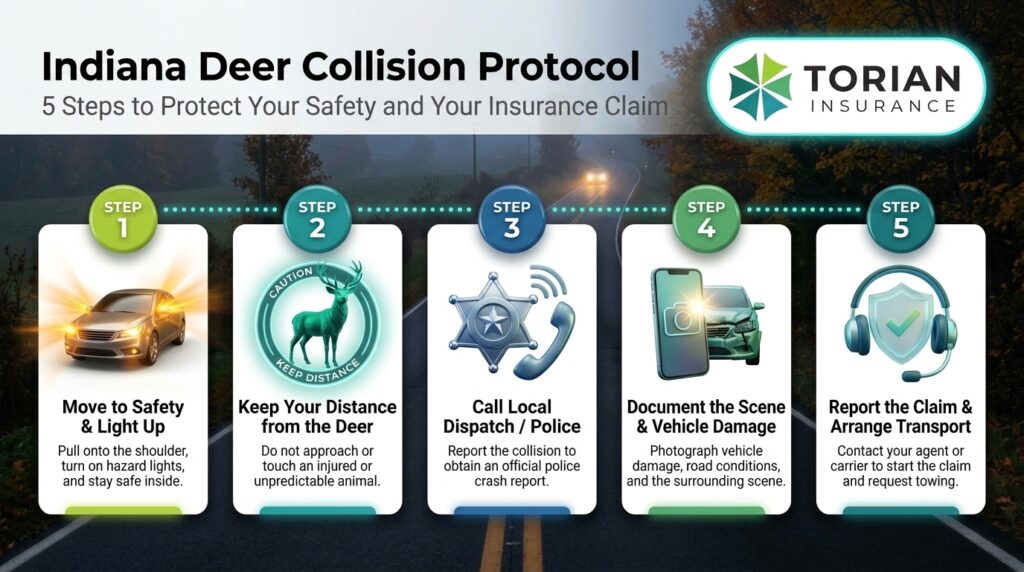
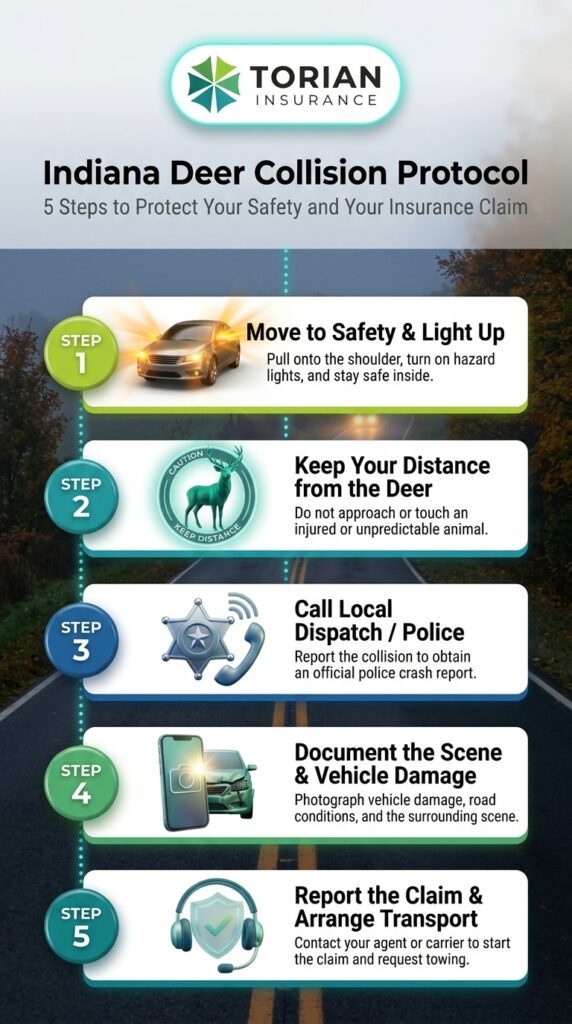
Here is the order to work through:
- Move to safety. If the car is drivable, pull onto the shoulder and turn on your hazard lights.
- Stay away from the deer. An injured animal can be unpredictable, so do not touch it.
- Call the police. Stay in your car if you are near traffic, and call so you have a crash report for the claim.
- Document the damage. Photograph the vehicle, the scene, and road conditions.
- Report it. Contact your agent or carrier to start the claim.
- Ask about the deer if you want to keep it (see the FAQ below for the Indiana permit rule).
One safety point drives the whole insurance distinction. The Indiana DNR is blunt: “Never swerve to avoid hitting a deer,” and the Indiana State Police warn that drivers who swerve to miss a deer can lose control and hit a fixed object. Braking and striking the deer is usually safer, and it keeps the claim on the comprehensive side.
For the general claim steps that apply to any crash, see our guide on what to do after a car accident.
When Is Deer Risk Highest on Tri-State Roads?
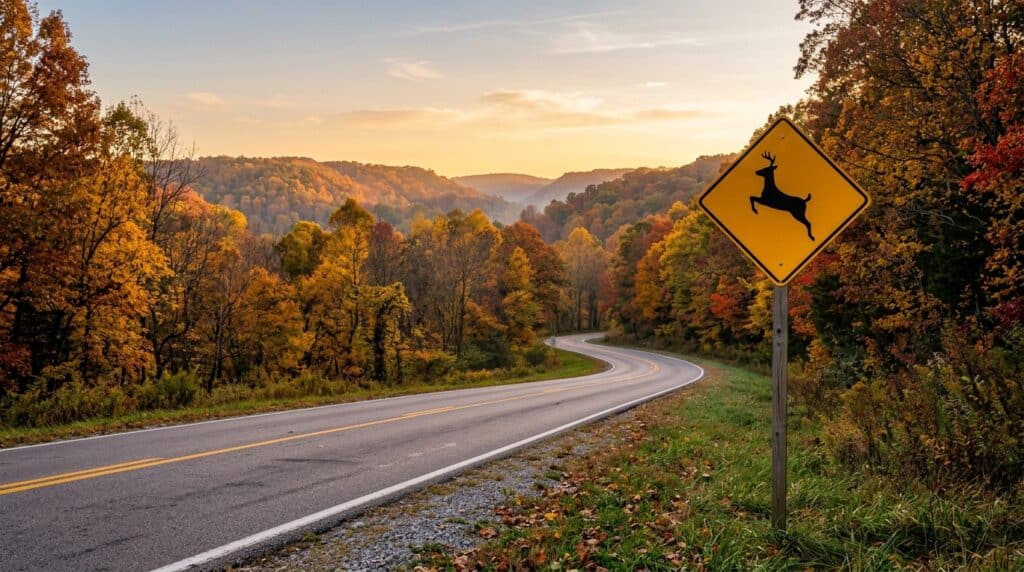
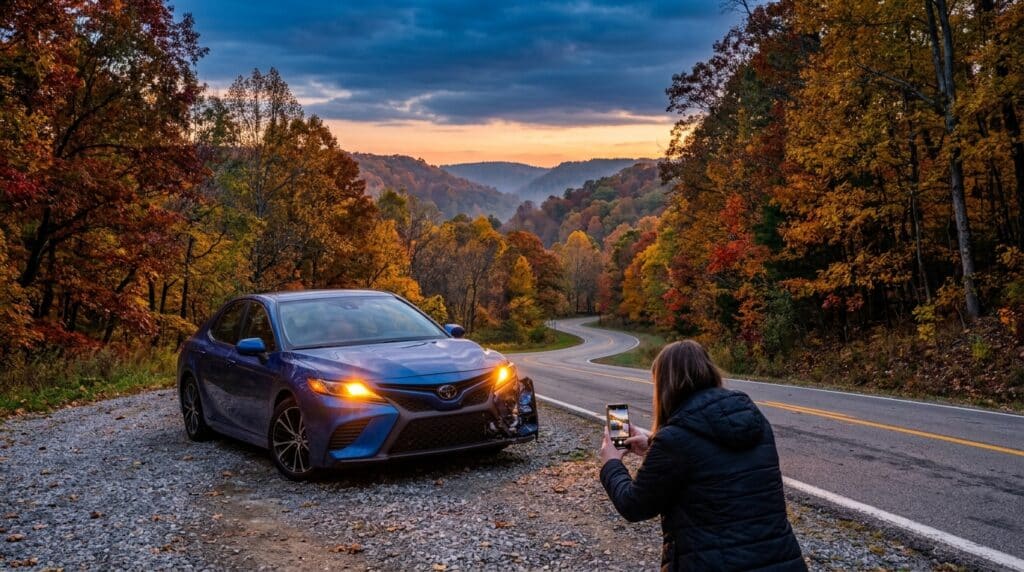
Deer-vehicle crashes spike from October through December during the rut, and November is the single worst month. Collisions are most likely at dawn and dusk.
The claims data makes the timing clear:
- Animal-strike claims peak in November at 13.8 claims per 1,000 insured vehicle years, more than three times the August low of 4.3, with October second at 10.0.
- The average animal-strike claim cost about $5,980 in 2023, up from $3,176 in 2014. That is a national average, not an Indiana or Torian figure.
- For Kentucky drivers, risk runs higher. Kentucky’s November frequency was 28.6 per 1,000 insured vehicle years, about double the national November figure.
- In Indiana, the DNR reports more than 15,000 deer-vehicle collisions each year, concentrated in October and November.
Brian MacGowan, a Purdue Extension wildlife specialist, writing on Purdue Forestry and Natural Resources’ Got Nature? blog, puts it plainly: the peak runs October to December, and “most collisions occur from dusk to dawn on high speed rural roads.” If your commute includes two-lane county roads at those hours, you are driving the highest-risk window of the year.
A Quick Policy Check Before Deer Season
Before the rut, take ten minutes to confirm your coverage. It is cheaper than a surprise at claim time, and the checklist is short.
Run down this short checklist:
- Confirm you carry comprehensive, not just liability. It is the only coverage that pays for a deer strike.
- Check your comprehensive deductible so you know what you would owe.
- Ask whether towing and rental reimbursement are on your policy. Both are add-ons that matter if the car is not drivable.
- If your car is financed, confirm full coverage is in place, since lenders require it.
How Torian Insurance Helps
As an independent agency, we are not tied to a single company. We shop multiple carriers to match you with car insurance coverage that fits your vehicles, your routes, and your budget, including the comprehensive coverage that responds to a deer strike. A quick review before deer season can catch a gap you did not know you had.
We do not decide your claim; your carrier does that. What we do is help you understand what your policy covers before you need it, and walk you through the process if you do hit a deer. As Evansville’s largest locally owned independent insurance agency, with more than 1,000 years of combined experience, serving drivers across Indiana, Kentucky, and Illinois, we are the local call to make when something crosses the road in front of you.
Frequently Asked Questions About Deer Strikes and Car Insurance
Does car insurance cover hitting a deer?
Yes, if you carry comprehensive coverage. Hitting a deer is a comprehensive (“other than collision”) claim on most personal auto policies, so your comprehensive coverage pays after your deductible. Liability-only policies do not cover it.
Will my rates go up if I hit a deer?
It depends on your carrier and your claims history, so there is no universal answer. Whether a deer claim affects your premium is a question for your carrier or agent.
Can I keep a deer I hit in Indiana?
Yes, with a permit. In Indiana, a local or state police officer or a DNR official can issue a permit to legally possess a deer killed in a vehicle collision. Ask the responding officer at the scene.
Check Your Coverage Before the Next Deer Crosses
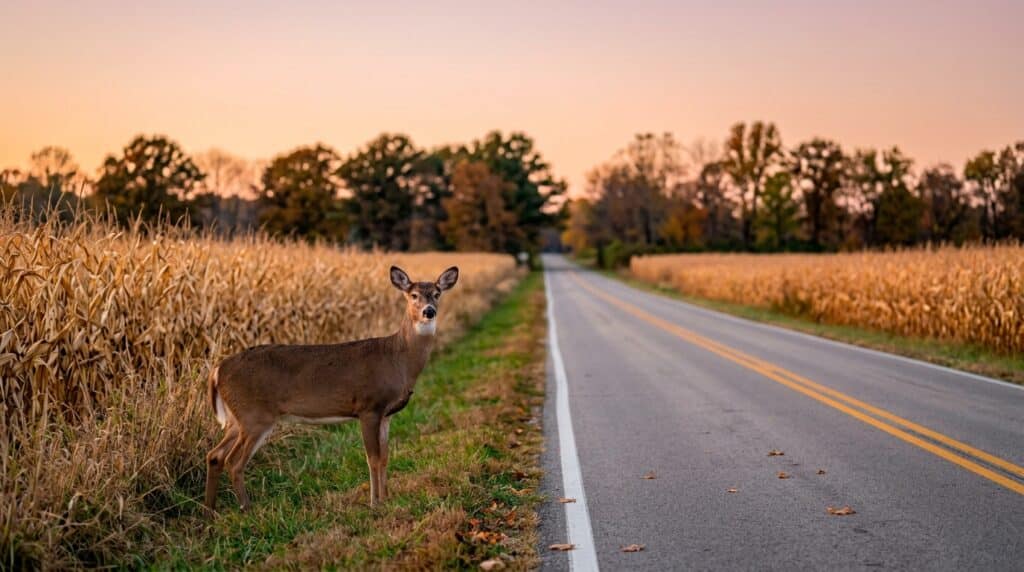
Deer season is predictable, and so is the coverage question that comes with it. A few minutes now confirming your comprehensive coverage and deductible beats sorting it out on the shoulder of a dark county road. Have questions about what your policy covers? Contact Torian Insurance to review your coverage with a local agent before the rut peaks.