

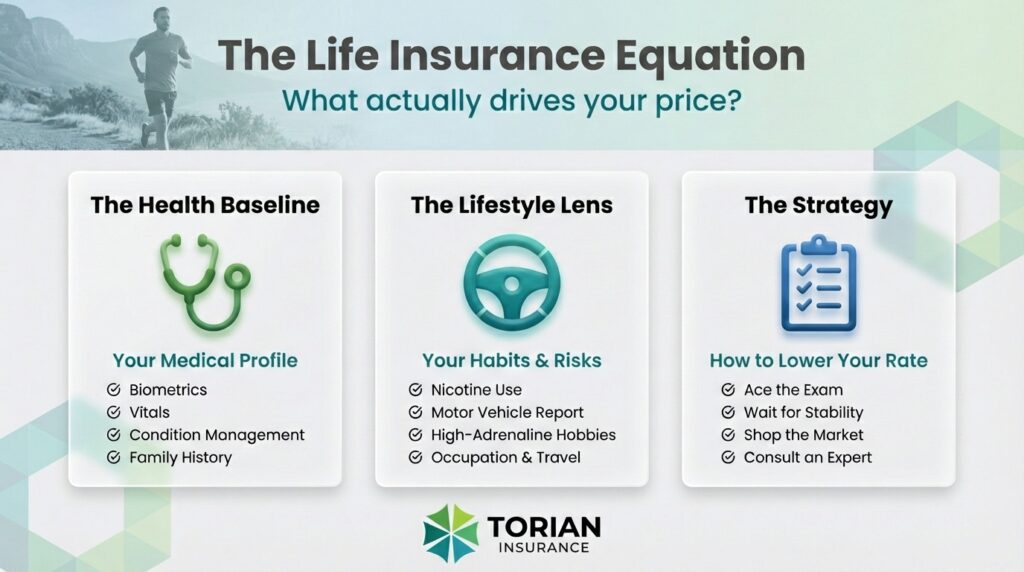
Life insurance is a cornerstone of sound financial planning, yet it often puzzles consumers when they encounter vastly different premiums for people of the same age. At the heart of this disparity is the underwriting process—how insurers evaluate your health, habits, and lifestyle. Your premium isn’t a random figure; it reflects how your overall risk is assessed. From tobacco use and health metrics to extracurricular pursuits and even driving records, multiple factors play a role in determining your cost.
This article explores these influential drivers of life insurance rates and offers practical steps to help you potentially secure better premiums. We also discuss how independent agents, such as those at Torian Insurance, can guide you through the underwriting maze to find the most suitable policy for your circumstances.
How Life Insurance Pricing Works (Underwriting 101)
Underwriting is the process through which insurers determine your risk category. Their evaluation is based on your health details, medical tests, and lifestyle data. Each insurer has its own underwriting guidelines, meaning premiums can vary—often significantly—for the same individual.
What Is Underwriting?
Underwriting involves reviewing your application (and sometimes medical exam results) to classify you in a specific risk category that results in your premium quote. People who are generally healthy, manage any chronic conditions well, and demonstrate responsible behaviors often land in better risk classes. According to the National Association of Insurance Commissioners (NAIC), understanding these classifications is key to finding appropriate coverage.
Common Risk Classifications
Insurers typically categorize applicants into risk tiers such as:
- Preferred Plus: Exceptional health metrics, minimal risk factors.
- Preferred: Excellent health with only minor issues.
- Standard: Average health, possibly with well-managed conditions.
- Table Ratings: Higher risk due to notable medical or lifestyle factors.
- Decline: Very high risk that goes beyond the insurer’s acceptable limits.
A lower-risk classification typically translates to more affordable life insurance rates.
Underwriting: Inputs and Outputs
Underwriting leverages data to gauge your overall risk:
- Application Details: Basics like age, height, weight, smoking status, and hobbies.
- Medical Exams, Lab Work, and Medical Records: Insights into your current and past health.
- Prescription History: A quick snapshot of how you manage or treat medical conditions.
- Driving Record: A history of traffic violations or DUIs may increase perceived risk.
- Other Checks: Occupation, travel patterns, and criminal history may also be examined.
From these inputs, carriers produce an output: your risk classification and the resulting premium.
Term vs. Whole Life: Why Premiums Differ
Life insurance rates depend not only on your health and lifestyle, but also on the type of policy you choose. Term life insurance is designed to cover you for a set period (like 10, 20, or 30 years), so premiums are usually lower because coverage is temporary. Whole life (permanent) insurance can last your entire life and often builds cash value, so premiums are typically higher. Some permanent policies also include additional fees and guarantees that increase cost.
If you’re mainly looking for the most affordable coverage for income replacement, term is often the starting point; if you want lifelong coverage and long-term planning features, permanent options may fit better. Learn more in our guide: Term Life vs. Whole Life Insurance.
Health Factors That Most Affect Life Insurance Rates

Health stands at the forefront of life insurance underwriting because it is the most telling indicator of longevity. While carriers acknowledge that future health issues might arise unexpectedly, your current health status and history offer the best immediate lens into possible risks.
Key Health Conditions
- Blood Pressure: Managing high blood pressure through medication, diet, and exercise can reduce risk. If you demonstrate stable readings, insurers may place you in a better category. The American Heart Association defines normal blood pressure as less than 120/80 mm Hg.
- Body Weight (BMI): A body mass index within a healthy range is advantageous. Muscle mass vs. fat can influence your classification; additional documentation may help you secure a better rate if you’re athletic. The CDC defines a healthy BMI as between 18.5 and 24.9 for most adults.
- Diabetes: Carriers assess how effectively you manage Type 1 or Type 2 diabetes. Stable blood sugar levels and adherence to treatment plans can significantly help.
- Family History of Illness: A record of early heart disease or cancer doesn’t always guarantee higher rates, but certain carriers weigh this factor more heavily. Providing your own recent medical tests showing good health can offset these concerns.
- Mental Health Stability: Managed depression or anxiety usually does not result in steep premium hikes. Transparent and consistent treatment often mitigates any negative impact.
Lifestyle Factors Insurers Consider When Pricing Policies
Insiders in the insurance industry often point out how certain lifestyle choices can significantly affect your risk category.
Key Lifestyle Influences
- Tobacco and Nicotine Use: Whether you smoke cigarettes or vape, nicotine use drastically raises rates. Quitting for around 12 to 24 months can often lead to more affordable premiums.
- Alcohol and Substance Use: Heavy drinking or ongoing substance abuse raises serious red flags, while a past issue with a stable recovery record may be assessed more favorably.
- Driving Record: Repeated incidents or multiple DUIs present a statistically higher likelihood of claims.
- High-Risk Occupations: Construction, mining, or other dangerous work may warrant a higher premium.
- Frequent Travel: Extended travel to high-risk or politically unstable regions might draw more scrutiny.
- Policy Coverage Amount: The higher the coverage, the more in-depth the review because of the larger potential payout.
Hobbies That Impact Life Insurance Rates
Hobbies provide a glimpse into your risk profile. Yet even adventurous interests do not always disqualify you from affordable coverage. An insurer focuses on the frequency of your high-risk pastime, your level of expertise or certifications, and whether you follow recommended safety measures.
Risk Categories for Hobbies
- Low-Risk Hobbies: Running, moderate cycling, or gardening are usually not factored into your premium.
- Moderate-Risk Hobbies: Recreational scuba diving, hobby racing, or mountain climbing can inch your rates up slightly.
- High-Risk Hobbies: Activities such as skydiving, private piloting, or BASE jumping generate higher surcharges, although carriers may differ in precisely how these are rated.
Minimizing Hobbies’ Impact
Stay transparent about your activities. If you have a certification or special safety training, provide this information to demonstrate responsibility. Carriers often reward evidence of prudent risk management, such as using recommended gear or maintaining membership in reputable clubs.
Common Mistakes That Can Negatively Impact Rates
- Going In Unprepared: Skipping a good night’s sleep or ignoring exam guidelines can lead to suboptimal test results.
- Being Dishonest: Omitting known health conditions or lifestyle habits can backfire if discovered later.
- Applying Immediately After Diagnosis: Waiting until you have a stable track record of management can yield better rates.
- Underinsuring or Overinsuring: Mismatched coverage can affect both your budget and eligibility. Evaluate your income, debts, and future obligations before selecting a policy.
- Avoiding Independent Guidance: Without outside help, you might miss out on policies with more lenient underwriting standards for your specific risk profile.
How to Minimize Costs and Get the Best Rate
Once you recognize potential pitfalls, you can take direct steps to secure a better deal.
Actionable Steps
- Time Your Medical Exam Wisely: Follow the carrier’s exam instructions and schedule when you’re rested.
- Keep Evidence of Health Gains: Recent improvements—like weight loss or controlled blood pressure—should be documented and shared with underwriters.
- Consider a Pre-Qualification: An overview of how different carriers might view your risk before you commit to one application can help you shop smart.
- Match Policy Type to Your Needs: A term insurance policy may be more budget-friendly than a permanent policy if your coverage requirements are short or medium term.
- Remain Proactive: If you receive a higher quote due to a condition, keep records of improvements over time and ask your agent if a reevaluation is possible later.
The Life Insurance Medical Exam: What Happens and How to Prep
Many policies include a short paramedical exam to confirm your health metrics for underwriting. The appointment typically includes basic measurements (height, weight, blood pressure), a health questionnaire, and often blood and urine samples. Results can influence your rate class, so a little preparation can help you avoid avoidable “bad readings” on exam day.
Medical Exam Prep Checklist
- Ask About Fasting: Some exams require fasting (often 8–12 hours). Confirm instructions when you schedule.
- Hydrate Well the Day Before: Water can make blood draws and urine samples easier (avoid excess sugar/energy drinks).
- Avoid Hard Workouts for 24 Hours: Heavy exercise can temporarily affect blood pressure and some lab markers.
- Skip Nicotine and Limit Alcohol Beforehand: Nicotine can raise blood pressure and trigger tobacco classification; alcohol can affect labs.
- Avoid Salty Foods and Excess Caffeine the Day Of: Both can elevate blood pressure.
- Bring What the Examiner Needs: Photo ID, a list of medications/dosages, and your doctor information.
- Reschedule If You’re Sick or Injured: A fever, infection, or short-term medication change can distort results.
- Choose a Calm Time: Morning appointments often work well if fasting is required and stress is lower.
If you’re unsure which policies require an exam—or whether a no-exam option makes sense—an independent agent can help you compare the trade-offs in price and underwriting requirements.
Additional Insights: Preparing for Future Changes in Premiums
Even if your initial rate seems high, life insurance is not set in stone. Many policyholders can request reevaluation or even consider switching companies if their health or habits significantly improve. For example, if you cease smoking and maintain a clean nicotine record for a year or two, you may secure a new policy or reprice your existing one at a more favorable rate.
Because insurance companies occasionally update underwriting guidelines, periodic reviews with an agent may help you catch opportunities for improved coverage or premium reductions. Consistency in doctor visits, medication adherence, and healthy living can be your best ally.
Real-World Scenarios: How Profiles Affect Life Insurance Rates
- Controlled High Blood Pressure: A 45-year-old with normal BMI and consistently controlled blood pressure could still qualify for a Preferred category.
- Newly Former Smoker: A 50-year-old who recently quit smoking may face slightly elevated rates initially but can request a review after meeting a smoke-free window—often 12 to 24 months.
- Hobby Diver: A 35-year-old who frequently dives but holds advanced certifications may see only a minor surcharge, especially if safety records show experience and caution.
These scenarios illustrate that underwriting is rarely a simple pass-fail model; nuanced details often shift the final outcome.
The Advantage of Working With an Independent Agent

Independent agents aren’t tied to a single insurance company. That matters because underwriting rules vary by carrier, so the same person can receive different rate classes and premiums depending on where they apply. An independent agent helps you compare multiple carriers, identify which companies are more favorable for your specific health history or lifestyle, and avoid wasting time applying to a carrier that’s likely to price you higher than necessary.
Why Choose Torian Insurance
Torian Insurance has served clients since 1923 and is locally owned, supporting individuals and families across Southern Indiana, Illinois, and Kentucky. Our role is to help you navigate underwriting clearly and efficiently—so you understand your options, your expected rate class, and the trade-offs between policy types.
What You Gain With Torian Insurance
- Carrier Shopping (Not One-Company Quotes): We compare options across multiple insurers to help you find competitive pricing for your profile.
- Underwriting Guidance Before You Apply: We help you anticipate how factors like tobacco use, medications, driving history, travel, or higher-risk hobbies may affect rates—so there are fewer surprises.
- Clear Coverage Recommendations: We help match the policy type and amount to your goals (income replacement, mortgage protection, family protection), not just the lowest premium.
- Support From Application to Approval: From scheduling exams (if needed) to paperwork and follow-ups, we help keep the process moving.
FAQs About Life Insurance Rates and Underwriting
What Health Conditions Raise Premiums the Most?
Unmanaged chronic conditions—such as poorly controlled diabetes, heart disease, or significant obesity—lead to higher premiums. Good management can substantially mitigate these costs.
Does Vaping Affect Life Insurance Rates?
Yes; many insurers categorize vaping similarly to smoking. You’re likely to land in the tobacco-user bracket until you have a long record of nicotine-free tests.
How Long After Quitting Smoking Can I Qualify for Better Rates?
Often 12 to 24 months, although exact timelines vary by carrier.
Will Risky Hobbies Always Lead to Exclusions?
Most insurers don’t exclude coverage outright simply because of skydiving or similar pursuits. Expect a higher premium, but not necessarily a decline.
Do Prescription Medications Automatically Increase Premiums?
Not necessarily. Insurers generally assess how controlled your condition is rather than focusing solely on the prescription.
Is No-Exam Life Insurance More Expensive?
Typically yes. Policies that skip a comprehensive exam—often called no-exam life insurance—may cost more because the insurer assumes additional risk without full medical information.
How Do DUIs Affect Rates?
A single DUI can result in a moderate premium increase, while multiple DUIs are viewed much more seriously, potentially leading to coverage delays or denials.
How Can I Find the Best Insurer for My Situation?
Working with an independent agent who understands underwriting variations among carriers is often the most efficient way to find a good match.
Effective Strategies for Securing Optimal Life Insurance Rates
Life insurance rates hinge on a careful balance of health, lifestyle, and hobby-related risks—factors that can vary significantly from one person to another. By tending to your health, providing honest and comprehensive information, and timing your application when conditions are stable, you can improve your chances of landing more favorable rates.
For personalized assistance, partnering with an independent agency like Torian Insurance can make all the difference. Their local expertise and expansive network of carriers allow them to match you with a policy that aligns with your specific goals and risk profile. If you’re ready to explore your options or want more information, schedule a consultation with Torian Insurance today to request a quote.