Buying motorcycle insurance in Indiana is not just about meeting a legal minimum. It is about protecting yourself, your bike, and your savings when a ride goes wrong. This guide breaks down what the law requires across Indiana, Kentucky, and Illinois, what those minimums leave out, and how to build a policy that actually fits how you ride.
Key Takeaways
- Indiana requires at least 25/50/25 liability coverage on a motorcycle: $25,000 per person and $50,000 per accident for bodily injury, plus $25,000 for property damage.
- Kentucky and Illinois set similar floors (Kentucky 25/50/25 or a $60,000 single limit, Illinois 25/50/20), but the details differ in ways that matter to riders.
- Kentucky excludes motorcycles from its no-fault (PIP) system, so a rider relies on MedPay or health insurance for their own injuries unless they buy optional coverage.
- Illinois requires uninsured motorist bodily injury coverage that cannot be waived. Indiana and Kentucky include it unless you reject it in writing.
- State minimums are a legal floor, not full protection. With about one in seven drivers uninsured, uninsured and underinsured motorist coverage is one of the most useful add-ons a rider can carry.
- Full coverage (liability plus collision and comprehensive) makes the most sense on a newer, financed, or customized bike.
What Motorcycle Insurance Is Required in Indiana, Kentucky, and Illinois?
All three states require motorcyclists to carry liability insurance before riding on public roads. Liability pays for injuries and property damage you cause to others. Indiana and Illinois apply the same liability rules to motorcycles as to cars, while Kentucky treats motorcycles differently for no-fault coverage. The minimums below are the starting point, not the finish line.
Motorcycle Insurance Minimums in the Tri-State Area
| State | Minimum liability (BI per person / BI per accident / PD) | Uninsured / underinsured motorist | Motorcycle-specific note | Statute |
|---|---|---|---|---|
| Indiana | 25 / 50 / 25 ($25,000 / $50,000 / $25,000) | UM/UIM offered at limits equal to your liability; included unless rejected in writing | Applies to motorcycles. The property damage minimum rose to $25,000 on July 1, 2018 | IC 9-25-4-5 |
| Kentucky | 25 / 50 / 25, or a $60,000 combined single limit | UM offered unless rejected in writing | No-fault PIP does not apply to motorcycles; a rider relies on MedPay or health coverage for their own injuries | KRS 304.39-110 |
| Illinois | 25 / 50 / 20 ($25,000 / $50,000 / $20,000) | UMBI at 25/50 required and cannot be waived; UMPD is separate and optional | Applies to motorcycles | 625 ILCS 5/7-203 |
A quick glossary for the abbreviations above: UMBI is uninsured motorist bodily injury coverage, UMPD is uninsured motorist property damage coverage, PIP is personal injury protection, and MedPay is medical payments coverage. Each is explained in the coverage section below.
Indiana motorcycle insurance requirements
In Indiana, the minimum is 25/50/25. The property damage figure rose from $10,000 to $25,000 on July 1, 2018, so older guides that still list $10,000 are out of date. Indiana also requires insurers to offer uninsured and underinsured motorist coverage at limits at least equal to your liability limits, and it stays on the policy unless you reject it in writing.
Insurance is only part of what the law requires. For helmet rules, endorsements on your license, and equipment standards, see our guide to Indiana’s motorcycle laws.
Kentucky motorcycle insurance requirements
Kentucky riders can meet the requirement with 25/50/25 or a single $60,000 limit. The wrinkle is no-fault. Kentucky requires personal injury protection on cars but excludes motorcycles. Unless a rider buys optional PIP, neither the rider nor a passenger can collect no-fault benefits for a motorcycle injury, so they lean on MedPay or health insurance instead.
Illinois motorcycle insurance requirements
Illinois sets its floor at 25/50/20 and adds a requirement the other two states do not: uninsured motorist bodily injury coverage at 25/50 that you cannot waive. Uninsured motorist property damage is separate and optional. If you register a bike in Illinois, that UMBI protection is built in.
State Minimums Are a Legal Floor, Not Full Protection
Meeting the state minimum keeps you legal, but it rarely covers the full cost of a serious motorcycle crash. Medical bills, a totaled bike, and another driver’s damaged vehicle can pass a $25,000 or $50,000 limit quickly. Once a claim exceeds your limits, the rest comes out of your pocket.
The gap widens when the other driver has little or no insurance. Nationally, about one in seven drivers, roughly 15.4%, were uninsured in 2023, and the rate varies widely from state to state. That is why uninsured and underinsured motorist coverage matters so much for riders, who are far more exposed in a collision than someone inside an enclosed vehicle.
Types of Motorcycle Insurance Coverage Explained
A motorcycle policy is built from several coverages. Liability is the only piece the state requires. The rest are optional but often worth carrying. Here is what each one does.
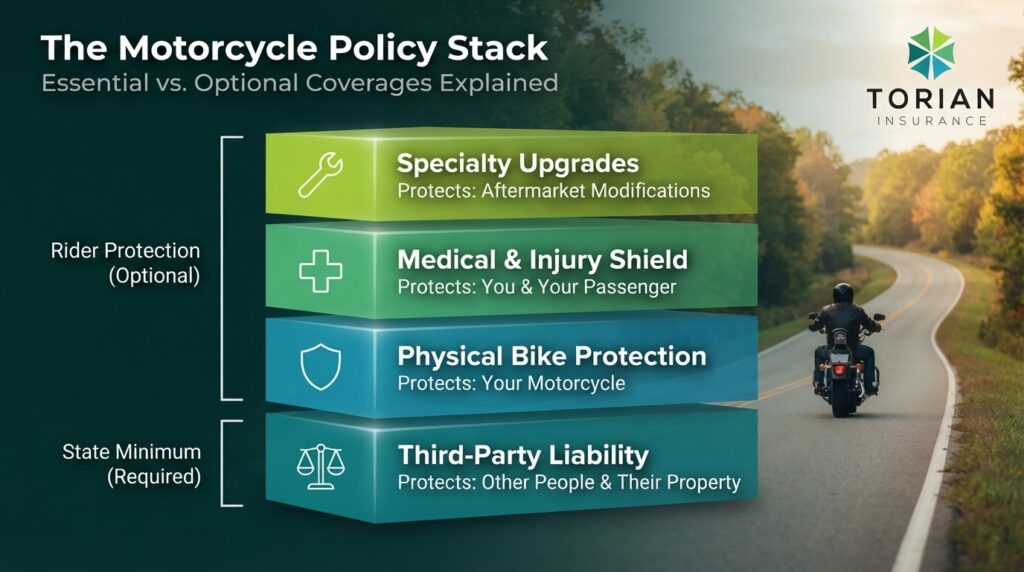
- Liability (bodily injury and property damage): Pays for injuries and property damage you cause to others. It does not pay for your own injuries or your bike. Many policies also offer guest passenger liability for a passenger hurt while riding with you.
- Collision: Pays to repair or replace your motorcycle after a crash with another vehicle or object, regardless of fault, minus your deductible.
- Comprehensive: Covers damage from events other than a collision, such as theft, fire, vandalism, or hitting an animal.
- Uninsured/underinsured motorist (UM/UIM): Pays for your injuries, and in some cases property damage, when an at-fault driver has no insurance or not enough. It splits into UMBI (bodily injury) and UMPD (property damage).
- MedPay (medical payments coverage): Pays medical bills for you and your passenger after a crash, regardless of fault, usually with no deductible.
- Personal injury protection (PIP): Similar to MedPay but broader, often covering lost wages and some services. Whether you get MedPay or PIP depends on your state, and in Kentucky it is optional on a motorcycle.
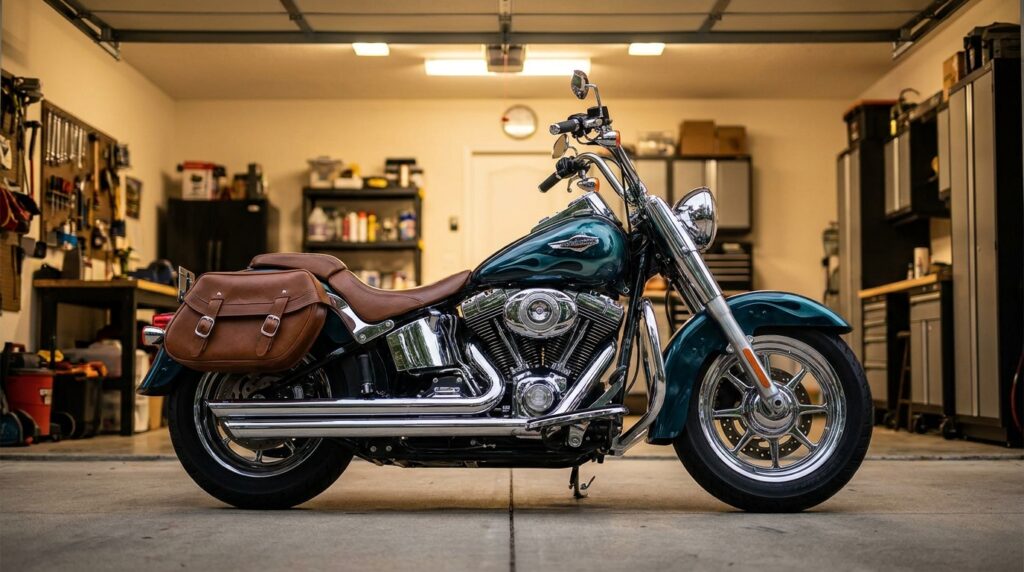
- Custom parts and equipment: Standard policies often limit coverage for aftermarket parts. If you have added chrome, a custom paint job, saddlebags, or a sidecar, ask about a custom equipment endorsement.
Liability-Only vs. Full Coverage: Which One Do You Need?
Liability-only meets the law and pays for damage you cause to others. Full coverage adds collision and comprehensive, which pay to fix or replace your own bike. The right choice depends mostly on your motorcycle’s value and whether you still owe money on it.
- Liability-only tends to fit when: the bike is older, paid off, and inexpensive to replace, and you could cover a repair or replacement out of pocket.
- Full coverage tends to fit when: the bike is newer, financed or leased, customized, or valuable enough that losing it would set you back.
If you financed your motorcycle, a lender usually requires full coverage. It also helps to understand how a total-loss motorcycle value is calculated, because a payout is based on the bike’s depreciated value, not what you owe. When the loan balance is higher than the bike is worth, GAP coverage for a financed motorcycle can close that difference.
Endorsements and Extras Worth Considering
Beyond the core coverages, a few endorsements can save you real money after a loss. These are add-ons, so you only pay for what fits your riding.
- OEM parts endorsement: Pays for original manufacturer parts in a repair instead of cheaper aftermarket equivalents.
- Total loss or replacement cost: Replaces a totaled bike with a new one or an equivalent model, rather than paying depreciated value.
- Custom equipment coverage: Insures aftermarket additions like chrome, paint, saddlebags, or a sidecar that a base policy may not fully cover.
- Roadside assistance: Covers towing, fuel delivery, and help after a mechanical or electrical breakdown.
- Trip interruption: Reimburses food, lodging, and transportation if a covered breakdown leaves you stranded away from home.
How Much Does Motorcycle Insurance Cost in Indiana?
There is no single price for motorcycle insurance in Indiana. Your premium depends on you, your bike, and how you ride. Because an independent agency shops several carriers, the same rider can see very different quotes from one insurer to the next.
Insurers weigh a mix of factors when pricing a motorcycle policy:
- Your age, driving record, and where you live.
- The type and style of bike. A sport bike usually costs more to insure than a cruiser.
- The age of the motorcycle and how many miles you ride each year.
- Where you store the bike and how you use it, whether commuting, touring, or weekend riding.
- The coverages and limits you choose, and how much you need to protect your assets.
There are also several ways to bring the premium down:
- Take a Motorcycle Safety Foundation (MSF) rider course, which many insurers reward with a discount.
- Insure more than one bike for a multi-bike discount.
- Bundle your motorcycle and auto policies, or keep your motorcycle with the same company as your auto insurance, for a multi-policy discount.
- Ask about mature rider and association member discounts.
- Consider a lay-up policy for the off-season.
A lay-up policy suspends most coverage during the storage months and keeps only comprehensive active, so the bike stays protected against theft or fire. It can save money, but it comes with a catch. If you take the bike out on a warm winter day without restoring full coverage first, you are riding uninsured. For many riders, the savings are not worth that risk.
How Torian Insurance Helps
Torian Insurance is an independent agency, which means we do not work for a single carrier. We shop multiple companies to match your bike, your budget, and how you ride, then explain the tradeoffs in plain language. For a rider who crosses between Indiana, Kentucky, and Illinois, that also means making sure your coverage holds up under each state’s rules.
That independence matters most on the details that trip riders up: whether your uninsured motorist limits are where they should be, whether a financed or customized bike needs full coverage, and whether a lay-up policy actually saves you money for how you ride. We would rather have that conversation before a claim than after one. You can learn more about our motorcycle insurance coverage, or bring us your current policy for a second look.
Frequently Asked Questions About Motorcycle Insurance in Indiana
Is motorcycle insurance required in Indiana?
Yes. Indiana requires every motorcycle to carry at least 25/50/25 liability coverage: $25,000 per person and $50,000 per accident for bodily injury, plus $25,000 for property damage. Riding without it can lead to fines and a license or registration suspension.
Does Indiana require uninsured motorist coverage on a motorcycle?
Not exactly. Indiana requires insurers to offer uninsured and underinsured motorist coverage at limits equal to your liability limits, but you can reject it in writing. Because a meaningful share of drivers are uninsured, most riders are better off keeping it.
Are motorcycles covered by Kentucky’s no-fault (PIP) system?
No. Kentucky requires personal injury protection on cars but excludes motorcycles. Unless a rider buys optional PIP, neither the rider nor a passenger can collect no-fault benefits for a motorcycle injury, so they rely on MedPay or health insurance instead.
How much motorcycle insurance do I need?
Enough to cover more than the legal minimum. Match your liability limits to the assets you want to protect, add uninsured and underinsured motorist coverage, and consider full coverage if your bike is newer, financed, or customized. An independent agent can help you right-size the policy without overpaying.
Can I suspend my motorcycle insurance for the winter?
Some riders use a lay-up policy that pauses most coverage during the storage months while keeping comprehensive active. It can lower your premium, but if you ride during the lay-up period without restoring coverage, you are uninsured. Weigh the savings against how often you might ride on a mild winter day.

Ride With Coverage That Fits
The right motorcycle policy does more than check a box for the state. It protects your bike, your finances, and the people who ride with you. If you are not sure whether your current coverage holds up across Indiana, Kentucky, and Illinois, contact Torian Insurance to talk with a local agent who can review your policy and help you find the right fit.