
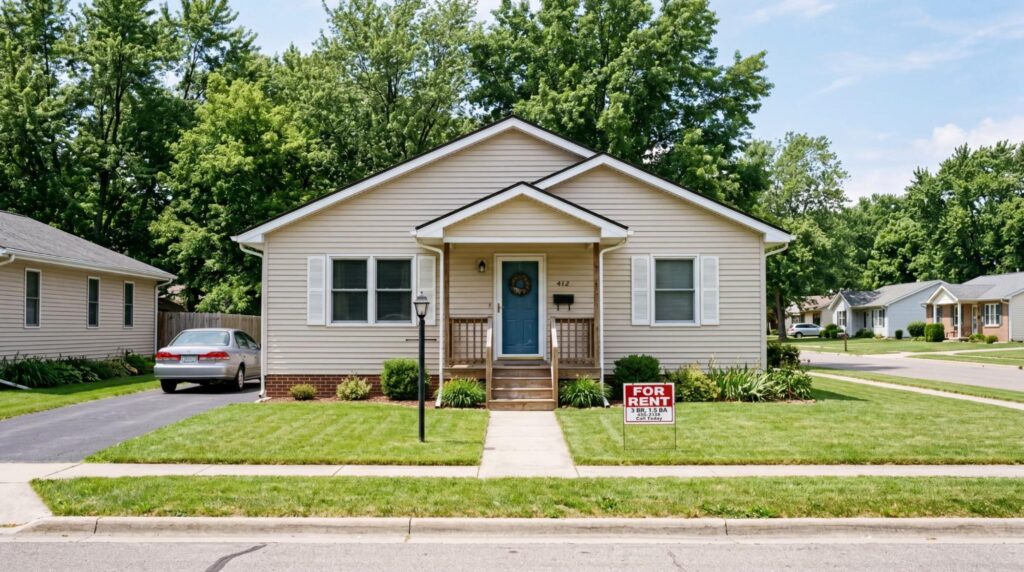
If you’re renting out a property in Indiana, the difference between landlord insurance vs. homeowners insurance Indiana landlords need to understand isn’t just technical. It’s the difference between a covered claim and a denied one. This post breaks down what each policy covers, why using the wrong one creates real risk, and what Indiana-specific factors apply when you make the switch.
Key Takeaways
- Homeowners insurance is designed for properties you live in. Landlord insurance is required when you rent to tenants, even part-time.
- Landlord insurance covers loss of rental income if a covered event makes your property uninhabitable. A standard homeowners policy does not.
- Neither policy covers your tenant’s personal belongings. Tenants need their own renters insurance.
- Indiana state law does not mandate landlord insurance, but most mortgage lenders require it as a condition of your loan when a home is used as a rental.
- Landlord insurance typically costs about 25% more than a standard homeowners policy, according to the Insurance Information Institute.
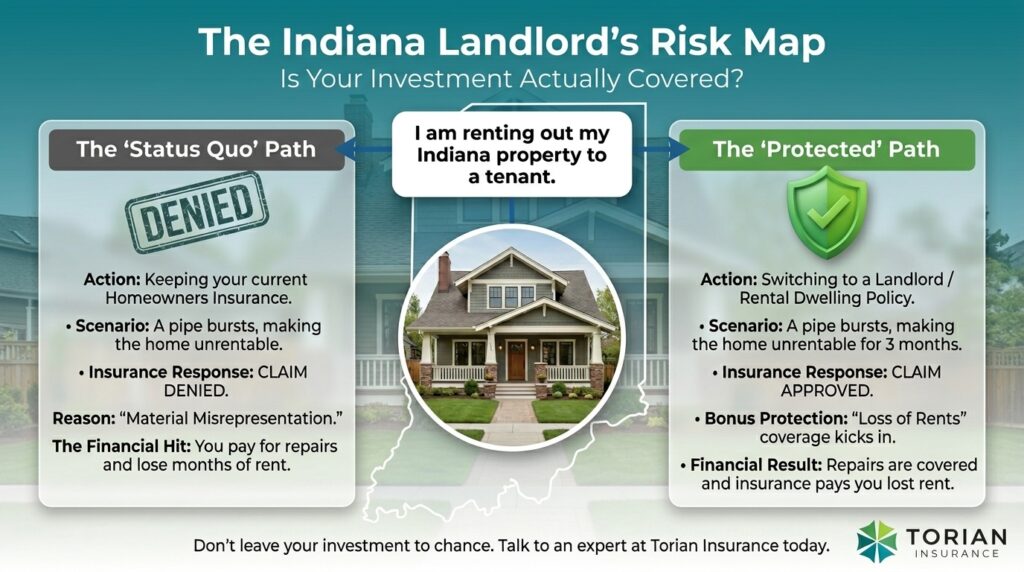
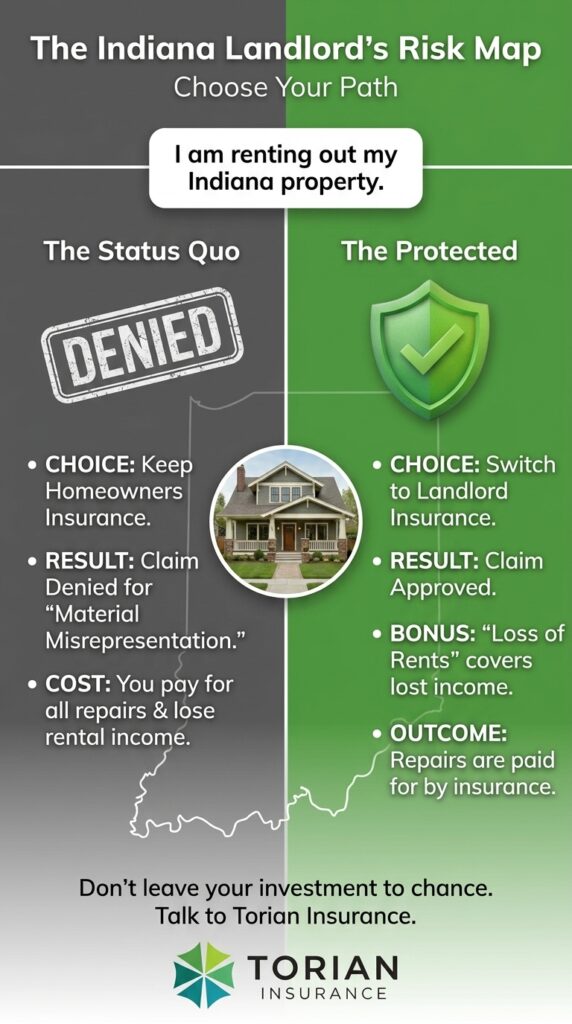
- Using a homeowners policy on a rental property can result in claim denial or policy cancellation due to material misrepresentation of occupancy risk.
What’s the Difference Between Landlord and Homeowners Insurance?
Homeowners insurance (HO-3) covers owner-occupied properties. Landlord insurance, also called a rental dwelling policy, is designed for properties where someone else lives as a tenant. The core distinction is occupancy: who lives in the property determines which policy applies.
Both policies cover the physical structure and provide liability protection, but they diverge from there. Homeowners insurance includes your personal belongings and provides additional living expenses if a covered loss forces you out of your home. Landlord insurance replaces those coverages with protections that fit rental use: loss of rental income and liability designed for a landlord-tenant relationship.
The table below summarizes the key coverage differences:
| Coverage Element | Homeowners Insurance | Landlord Insurance |
| Who it covers | Owner-occupants | Rental property owners |
| Dwelling/structure | Yes | Yes |
| Owner’s personal property | Yes | Landlord-owned items only (appliances, maintenance equipment) |
| Tenant’s personal property | No | No; tenant needs renters insurance |
| Liability (injuries on property) | Yes (personal) | Yes (landlord liability, broader scope) |
| Loss of rental income | No | Yes (if property uninhabitable due to covered loss) |
| Additional living expenses | Yes (for owner displacement) | Not applicable |
| Approximate cost | Baseline | ~25% more than standard homeowners |
Neither policy covers your tenant’s personal property. For tenants to protect their belongings, they need their own renters insurance.
What Landlord Insurance Covers That Homeowners Insurance Doesn’t
The most important coverage gap is loss of rental income. If a fire or other covered event renders your rental property uninhabitable, landlord insurance can replace the income you lose while repairs are underway. A homeowners policy has no equivalent provision for rental income.
Additional coverages that set landlord insurance apart from a standard homeowners policy:
- Loss of rental income during covered repair periods
- Landlord liability for tenant or visitor injuries on the property, typically with a broader scope than personal liability under a homeowners policy
- Landlord-owned personal property at the rental, such as appliances or maintenance equipment left on the premises
What landlord insurance does not cover: your tenant’s furniture, electronics, clothing, or other personal belongings. If a fire damages the unit, the tenant’s losses are not your landlord policy’s responsibility. Requiring tenants to carry renters insurance as a lease condition is a straightforward way to close that gap.
For a deeper look at how landlord policies are structured, see our post Safeguarding Your Investment: A Landlord Insurance Guide.
Indiana-Specific Considerations for Rental Property Insurance
Indiana state law does not require landlords to carry landlord insurance. Under Indiana Code Title 32, Article 31, which governs landlord-tenant relations in the state, there is no provision mandating a specific insurance type for rental properties. The requirement to carry landlord insurance most often comes from your mortgage lender, not from state law.
Most lenders require landlord or rental dwelling coverage as a condition of your mortgage when you convert an owner-occupied property to a rental or purchase an investment property, according to Bankrate. Failing to update your policy could constitute a violation of your loan agreement, regardless of what state law requires.
Indiana’s geography is also worth factoring into your coverage decisions. Properties in Southern Indiana and the tri-state area (IN/KY/IL) may be subject to flood risk from the Ohio River basin, tornado exposure, and weather-related losses common across the Midwest. These regional factors are worth discussing with your agent when choosing coverage limits and endorsements.
What Happens If You Use the Wrong Policy on a Rental Property?
If you keep a homeowners policy on a property you’re renting to tenants, you risk having your claim denied or your policy canceled. Insurers classify owner-occupied and tenant-occupied properties as different risk categories. Failing to disclose that a property is rented is treated as material misrepresentation, which can void the coverage you’re counting on when you need it most.
Consider a practical scenario: a tenant is injured on your rental property and files a liability claim. Your homeowners insurer investigates and discovers the property is tenant-occupied. Coverage can be denied entirely, and the policy may be canceled, leaving you personally exposed for the full cost of the claim.
Material misrepresentation, in insurance terms, means providing incorrect information about a known risk factor at the time of application or renewal. Occupancy type is one of the most fundamental risk factors an insurer evaluates. Updating your policy when a property’s occupancy changes is one of the most straightforward risk management steps a property owner can take.
Should You Require Your Tenant to Have Renters Insurance?
Yes. Requiring renters insurance as a lease condition is a widely recommended practice. It protects your tenant’s belongings and reduces the risk of disputes when personal property is damaged in an event your landlord policy doesn’t cover.
Landlords should require tenants to carry renters insurance as a lease condition, according to the Insurance Information Institute. Neither landlord nor homeowners policies cover a tenant’s personal belongings. A renters policy is typically inexpensive for tenants and includes personal liability coverage, which can also benefit you as a landlord if a tenant accidentally causes damage to the property.
Including a renters insurance requirement in your lease is a standard practice and is not prohibited under Indiana landlord-tenant law. It’s a simple step that protects both parties from unnecessary financial exposure.
How Torian Insurance Helps
As an independent agency, we work with multiple carriers to find coverage that matches your situation, whether you’re renting out one property or managing several. We compare options across insurers including Acuity, Cincinnati Insurance, Hanover, and others to find the right fit for Indiana rental property owners. We don’t underwrite policies ourselves; we shop the market on your behalf.
If you’re converting your primary residence to a rental, we can walk you through the transition from homeowners to landlord insurance and help you understand what your lender will require. If you’re purchasing a rental property for the first time, we can discuss coverage limits, liability options, and endorsements that make sense for the property type and the Southern Indiana or tri-state market.
Torian Insurance has served homeowners, landlords, and businesses in the Evansville area and across Indiana, Kentucky, and Illinois since 1923. Evansville’s largest locally owned independent insurance agency, our team brings more than 600 years of combined experience to every conversation. Read what our clients say.
Frequently Asked Questions About Landlord Insurance vs. Homeowners Insurance in Indiana

Do I need to change my insurance when I start renting out my home in Indiana?
Yes. A standard homeowners policy no longer applies once you begin renting to tenants. Homeowners insurance is underwritten for owner-occupied properties, and renting to tenants changes the occupancy risk classification. Continuing to use a homeowners policy on a rental can result in denied claims or policy cancellation.
Is landlord insurance required by Indiana law?
Indiana state law does not mandate landlord insurance. Indiana Code Title 32, Article 31 governs landlord-tenant relations but contains no insurance requirement for rental property owners. The requirement to carry landlord insurance typically comes from your mortgage lender as a condition of your loan, not from state law.
Does landlord insurance cost more than homeowners insurance?
Generally, yes. Landlord insurance costs about 25% more than a standard homeowners policy, according to the Insurance Information Institute. The higher cost reflects additional protections specific to rental properties, including loss of rental income coverage and landlord liability.
What does landlord insurance NOT cover?
Landlord insurance does not cover your tenant’s personal belongings. If a covered event damages a tenant’s furniture, electronics, or clothing, that loss falls outside your landlord policy. Tenants need their own renters insurance to protect their personal property.
Can I use a homeowners policy for short-term rentals or vacation rentals?
A standard homeowners policy is generally not designed to cover short-term or vacation rentals. Properties listed on platforms like Airbnb or VRBO present a different risk profile than owner-occupied homes. If you rent your property on a short-term basis, ask your agent about a vacation rental property insurance option or a landlord policy that accommodates that use case.
The Right Coverage Starts with the Right Conversation
Choosing the right coverage for a rental property is straightforward once you understand the occupancy distinction, but the consequences of getting it wrong are significant. A denied claim on a rental property or a canceled policy mid-term is an avoidable problem with the right policy in place from the start.
Whether you’re transitioning from homeowner to landlord, purchasing your first investment property, or just not sure whether your current coverage fits, a local agent can sort through the details with you.
Contact Torian Insurance to talk with a local agent about landlord insurance coverage for your Indiana rental property.