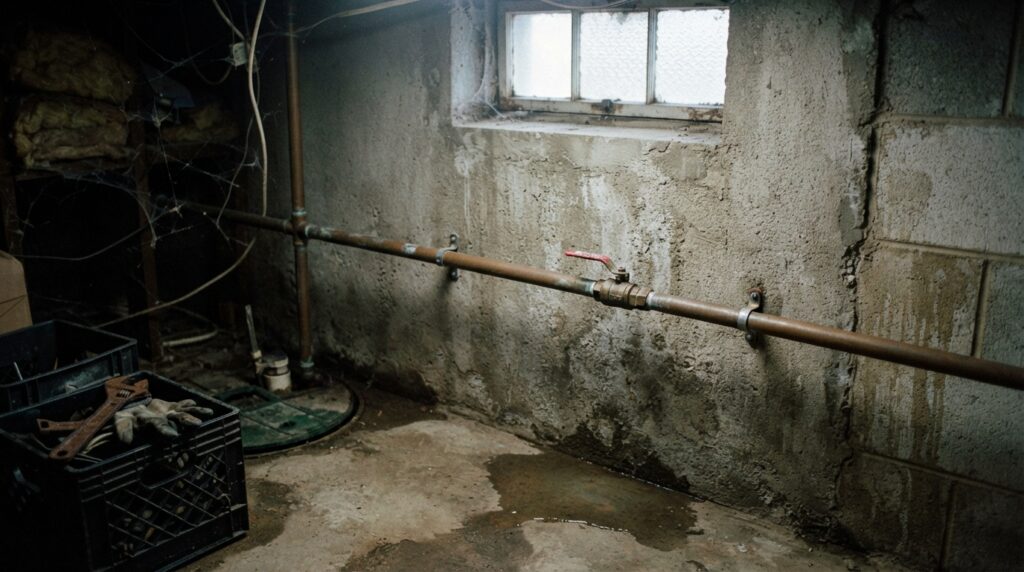
A pipe gives way in a cold snap, and an hour later there is water in the drywall and a question you have never had to ask. Does homeowners insurance cover frozen pipes in Indiana, or does it depend on what you did before the freeze? Mostly the latter: coverage comes down to a short list of conditions settled before winter starts.
Key Takeaways
- Water damage from a burst frozen pipe is often covered when the homeowner took reasonable steps to keep the pipes from freezing, the National Association of Insurance Commissioners says.
- A policy covers water that escapes plumbing suddenly and by accident, the NAIC says. A slow leak behind a wall falls outside that.
- A policy generally expects the home kept at a minimum temperature, or the water shut off if it is vacant, the NAIC notes.
- First hour: shut the water off, open the cabinets under sinks if the power is on, and call a plumber. Then call your agent with your policy number and date of loss, the Insurance Institute for Business and Home Safety advises.
Does Homeowners Insurance Cover Frozen or Burst Pipes?
Often yes for the water damage, with conditions. Water damage that follows a burst frozen pipe is often covered when reasonable steps were taken to keep the pipes from freezing, the NAIC says. the Indiana Department of Insurance adds the limit: frozen pipes from extreme cold “might not be covered if the damage is due to negligence.”
Torian Insurance helps homeowners across Evansville, Newburgh, and the tri-state area report losses like these. Here is how it plays out.
Frozen or burst pipes: what decides the claim at each stage
| Situation | What the sources say | What to do |
|---|---|---|
| Before winter | ||
| The home is vacant (away for the winter, for sale, between tenants) | When a home is vacant, a policy generally expects a minimum temperature to be maintained, or the water turned off. | Keep the heat on or shut the water off before you leave, and ask your agent what your policy requires. |
| Preventive steps were not taken | Damage may not be covered if the insurer concludes the plumbing was neglected. | Insulate exposed pipes, seal gaps, and service the heating system before winter. |
| When pipes freeze or burst | ||
| A pipe freezes and bursts in a home you live in and keep heated | The water damage is often covered when reasonable steps were taken to keep pipes from freezing. A sudden, accidental escape of water from plumbing is the kind of loss a homeowners policy covers. | Shut off the water, call a plumber, and report the loss to your agent as soon as you can. |
| The power goes out in a winter storm | Plumbing may freeze in extreme cold, particularly during power outages. | If water stops flowing, shut off the supply. When power returns, open cabinet doors so heat reaches the pipes. |
| After the loss | ||
| You have to move out during repairs | Most policies cover emergency living arrangements such as a hotel or temporary housing. Keep receipts for all additional expenses. | Save every receipt and ask your adjuster what your policy allows. |
| The claim is approved and you have a mortgage | The settlement check is generally made out to you and your mortgage servicer, which typically releases the money in stages. | Call your servicer early. |
| You and your insurer disagree (Indiana policy) | You can file a written complaint with the Indiana Department of Insurance, and the insurer has 20 business days to respond. | Talk with your agent first, then use the department’s portal. |
What Decides a Frozen Pipe Claim: Sudden Damage Versus Neglect
Two words decide a frozen pipe claim: sudden and accidental. A policy covers water that escapes plumbing suddenly and by accident, and damage may not be covered if the insurer concludes the plumbing was neglected, the NAIC explains.
- A sudden burst is the covered event. A pipe that splits in a cold snap is what the policy is written for. Torian’s guide to how named and open perils differ explains whether your policy lists what it covers or only what it excludes.
- A slow leak usually is not. Water seeping behind a wall for months, and the mold that follows, is gradual damage rather than a sudden loss. Torian’s guide to what homeowners insurance doesn’t cover works through the wear, tear, and neglect exclusions.
If water came up through a floor drain rather than a supply line, start with sewer line damage and water backup.
What If the Home Is Empty When the Pipes Freeze?
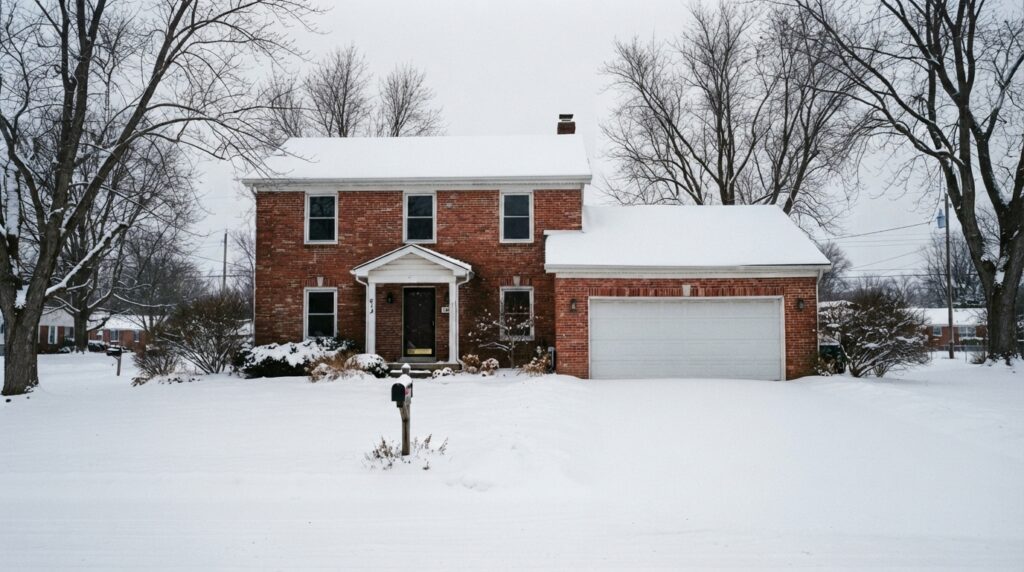
An empty house changes what the policy expects of you. A policy generally expects the home kept heated to a minimum temperature, and for a vacant home the alternative is turning the water supply off, the NAIC says. Skip both and the neglect question comes into play.
Across Evansville and the tri-state, “empty” covers more than people expect:
- A house left for a warmer state through January and February, with the heat turned down.
- A home on the market after the owners have moved out.
- A rental standing empty between tenants.
- A second property closed up for the season.
Two questions matter in all four: is the heat on, and is the water off? Preparing a house before an extended trip away from home covers the rest. Ask your agent how long yours can sit empty before a vacancy condition applies.
What to Do First If Your Pipes Freeze or Burst
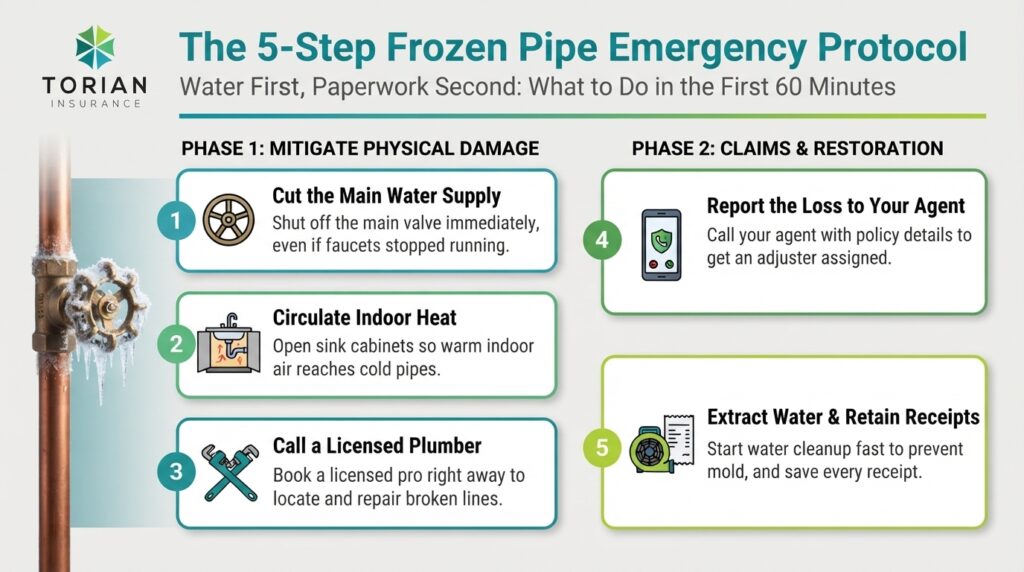
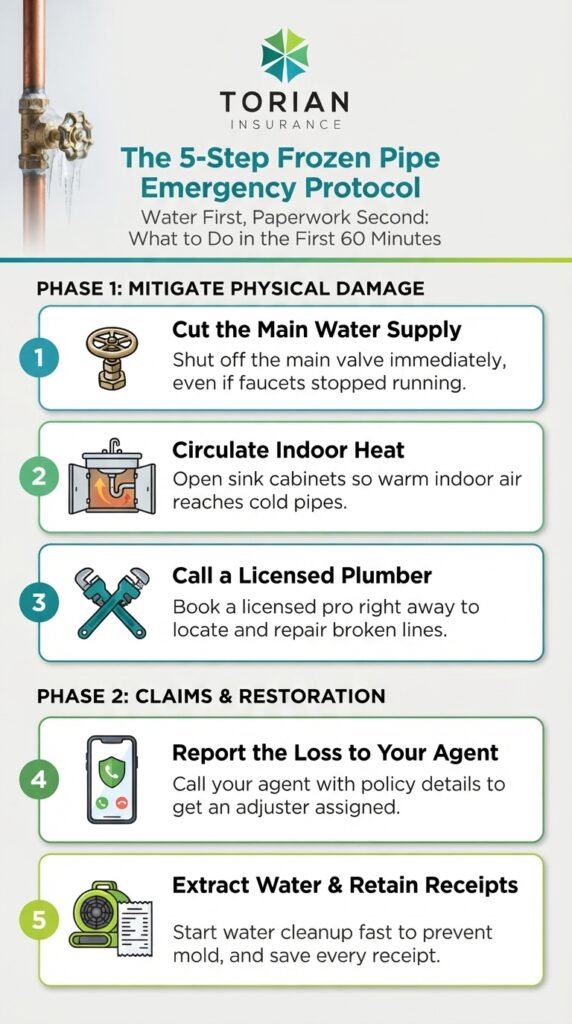
Deal with the water first and the paperwork second. Shutting the supply off limits the damage there is to claim. The sequence below is the Insurance Institute for Business and Home Safety’s guidance on what to do after a winter weather event.
- Shut off the water supply, whether the pipe has burst or the faucets have simply stopped running.
- Open the cabinet doors under sinks if you have power, so heat reaches the affected area.
- Call a plumber to make repairs to anything that burst.
- Contact your agent as soon as possible, with your policy number and the type and date of loss ready. You will be assigned a claim number and an adjuster, or you can report the loss to Torian directly.
- Arrange water removal before mold becomes an issue, and keep every receipt.
What to Document, and How a Burst Pipe Claim Gets Paid
Create a list and take photos or videos to document any property losses, the Insurance Institute for Business and Home Safety advises. What arrives later depends on how your policy settles claims.
- Document before you clean up: A written list of what was damaged, and photos or videos of each room before anything is moved. If you relocate, most insurance policies cover emergency living arrangements such as a hotel or temporary housing, the institute says.
- How the payout is calculated: Your insurer sends an adjuster to look at the damage. The settlement is paid on a replacement cost or actual cash value basis depending on the policy, the Consumer Financial Protection Bureau explains. Torian’s breakdown of actual cash value versus replacement cost shows what changes.
- If you have a mortgage: The insurer generally pays with a check made out to both you and your mortgage servicer or lender. That servicer typically releases the money in stages as work progresses, the bureau notes.
Renters, Condo Owners, and Landlords: Who Covers a Burst Pipe?
Who pays depends on what you own. The building and what is inside it fall to different policies.
- Renters: A landlord’s insurance only protects the building itself and not what’s inside. Damaged furniture, electronics, and clothing go through your own renters insurance, which also covers additional living expenses if you are displaced.
- Condo owners: Each HOA’s bylaws decide which parts of the building the association covers and which fall to the owner. Many HOAs treat the owner as responsible from the studs in, or the drywall in. Personal property is always excluded, and the master deductible is typically assessed to unit owners. After a burst pipe, ask your HOA where that line falls. Torian’s look at HOA master policy gaps explains where an owner’s own HO-6 condo policy picks up.
- Landlords: A landlord policy covers damage to the dwelling and may cover loss of rental income when a property becomes temporarily uninhabitable, while a tenant’s property is excluded. Landlord insurance applies when someone else lives there.
A Short Winter Pipe Prevention Checklist
Prevention happens before the first hard freeze. These steps come from the NAIC’s burst pipe guidance and IBHS’s own winter ready home checklist:
- Let faucets drip slightly, open the cabinet doors under sinks, and insulate pipes in attics, crawl spaces, and along all walls facing outside.
- Caulk and seal exterior cracks or gaps, add weatherstripping, cover ventilated crawl spaces, and have the heating system serviced each year.
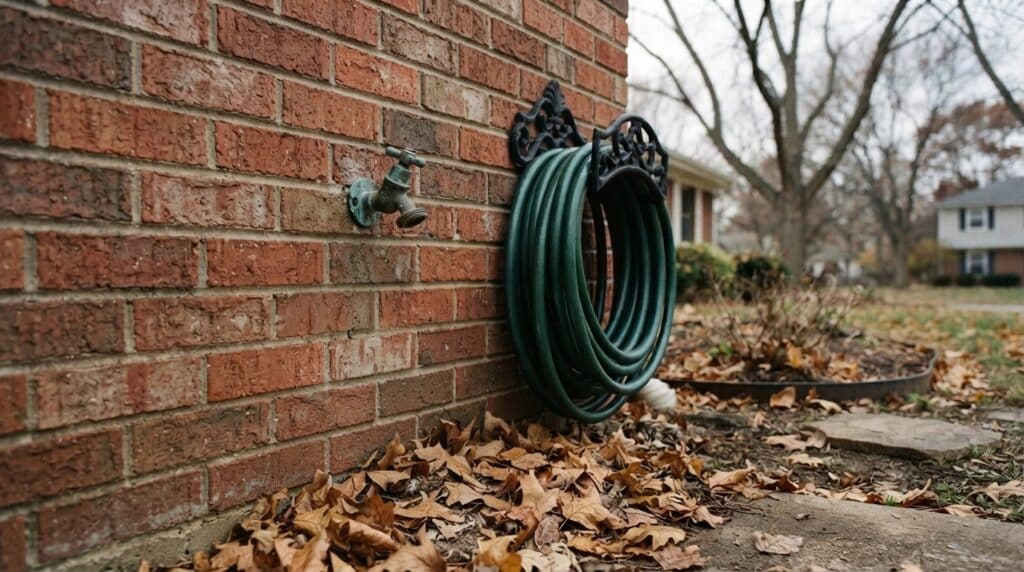
- Remove hoses from the house, drain and store them, and winterize outdoor systems. If you don’t have frost-proof outdoor faucets (homes built before 2010 typically do not), shut off the valves and insulate them.
Torian’s winter storm preparation tips go further.
How Torian Insurance Helps
We’re an independent agency, not a carrier. That means we don’t write the policy language or decide the claim. We shop multiple carriers on your behalf and check that the conditions on this page are ones your policy can live with, before winter rather than after a loss.
The agency dates to 1923, and the team behind it brings more than 1,000 years of combined experience. Torian Insurance has proudly become Evansville’s largest locally owned independent insurance agency, serving Newburgh and the tri-state area of Indiana, Illinois, and Kentucky. A frozen pipe question is a short conversation: what your policy expects when the house sits empty, and whether an endorsement is worth adding. Our home insurance page covers the forms we place.
If a pipe has already burst, reach out before permanent repairs begin. We can tell you what your carrier will want documented.
Frequently Asked Questions About Frozen and Burst Pipe Coverage
Does homeowners insurance pay to replace the burst pipe itself?
A standard homeowners form draws the line explicitly. It covers the escaping water, but the peril does not include loss to the system or appliance from which the water or steam escaped. Carriers vary, so ask your agent what your form says.
Does renters insurance cover damage from a burst pipe?
Your belongings go through your renters policy; the building repair is the owner’s claim. A landlord’s policy covers the building structure, not what’s inside the tenant’s unit. Damaged clothing, furniture, and electronics are yours to claim, along with additional living expenses if the unit becomes unlivable.
What can I do if my insurer denies or delays a burst pipe claim in Indiana?
Start with your agent, then file a written complaint with the Indiana Department of Insurance. Complaints are typically processed within 72 hours of receipt, and by Indiana law an insurance company has 20 business days to respond in writing, the department states. Policies issued in Kentucky or Illinois fall under those states’ regulators.
Talk Through Your Winter Coverage Before the First Freeze
Frozen pipes are a practical winter risk in Southern Indiana, and what decides a claim is settled before the temperature drops. If you’re not sure what your policy expects when the house is empty, contact Torian Insurance to talk it through.