Hosting an event where alcohol is served comes with a responsibility most people never think about. If a guest drinks too much and someone gets hurt, you could be the one facing the claim. Liquor liability insurance for events protects the person or organization serving or allowing alcohol, and for Evansville and tri-state hosts, that protection matters even at a backyard party or a BYO get-together.
Key Takeaways
- Coverage protects the host, not the drinker. Liquor liability insurance for events pays when an intoxicated guest injures someone or damages property. It does not protect the intoxicated guest’s own injuries.
- Indiana’s dram shop law reaches hosts. Under Indiana Code 7.1-5-10-15.5, anyone who furnishes alcohol can be liable, and “furnish” is defined broadly enough to include social hosts and event organizers, not just bars.
- Liability requires two things. You must have had actual knowledge the guest was visibly intoxicated when served, and that intoxication must be a proximate cause of the harm.
- BYO alcohol does not remove your exposure. If you host the event and control the setting, allowing guests to bring their own drinks can still put you within reach of the Act.
- Homeowners coverage may fall short. Homeowners policies often include some liquor liability, typically $100,000 to $300,000, which may not be enough for a larger event with an open bar.
- Venues usually require proof. Many venues require a certificate of insurance (COI) naming them as additional insured before you can serve alcohol on site.
Why Indiana Event Hosts Need Liquor Liability Coverage
Liquor liability coverage matters because Indiana law can hold the person furnishing alcohol responsible when an impaired guest causes harm. Even a small private event carries this exposure, and the risk is not theoretical.
Drunk driving remains a serious and preventable problem, and it is the exposure most event hosts underestimate:
- About 32 people die in U.S. drunk-driving crashes every day, roughly one person every 44 minutes.
- In 2024, 11,904 people died in alcohol-impaired crashes.
- Drunk drivers are involved in about 30% of all traffic fatalities.
When a crash traces back to your event, the injured party’s attorney looks for everyone who may share responsibility, and that can include the host. Liquor liability coverage is what responds to that kind of claim.
Liquor Liability Insurance and BYO Alcohol, Explained
Liquor liability insurance is coverage that pays for bodily injury, property damage, and related legal costs when an intoxicated person harms a third party after being served or furnished alcohol at your event. BYO alcohol, where guests bring their own drinks, does not remove the host’s responsibility.
A third party is anyone other than the intoxicated guest, including:
- Another guest at the same event.
- A bystander or neighbor.
- A driver on the road hit by an intoxicated guest after leaving.
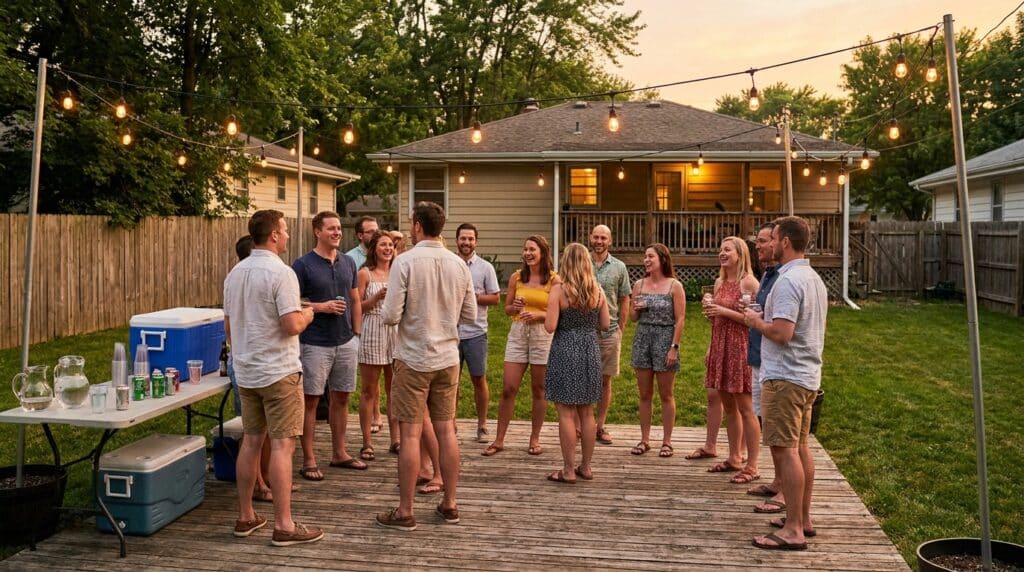
A common misconception is that a bring-your-own-bottle (BYOB) setup shifts all responsibility to the guests. It does not. If you organize the event, provide the space, and control the environment, you can still be treated as furnishing alcohol under Indiana law when you allow and facilitate the drinking.
Liquor liability is one piece of a broader event insurance picture that also covers cancellations, vendor problems, and general accidents. Our overview of how event insurance coverage works walks through the full range.
Host Liquor Liability vs. Commercial Liquor Liability: What Is the Difference?
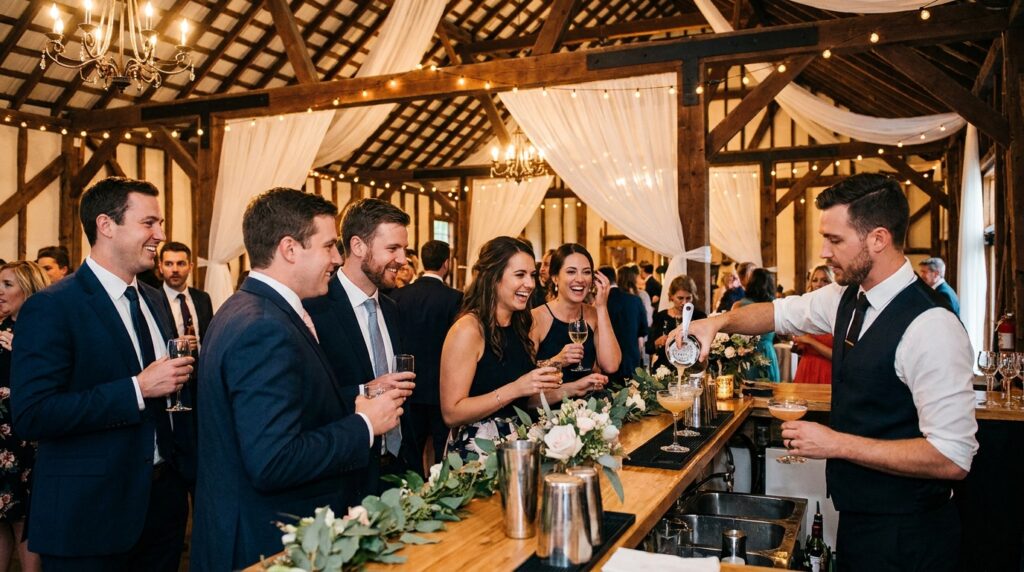
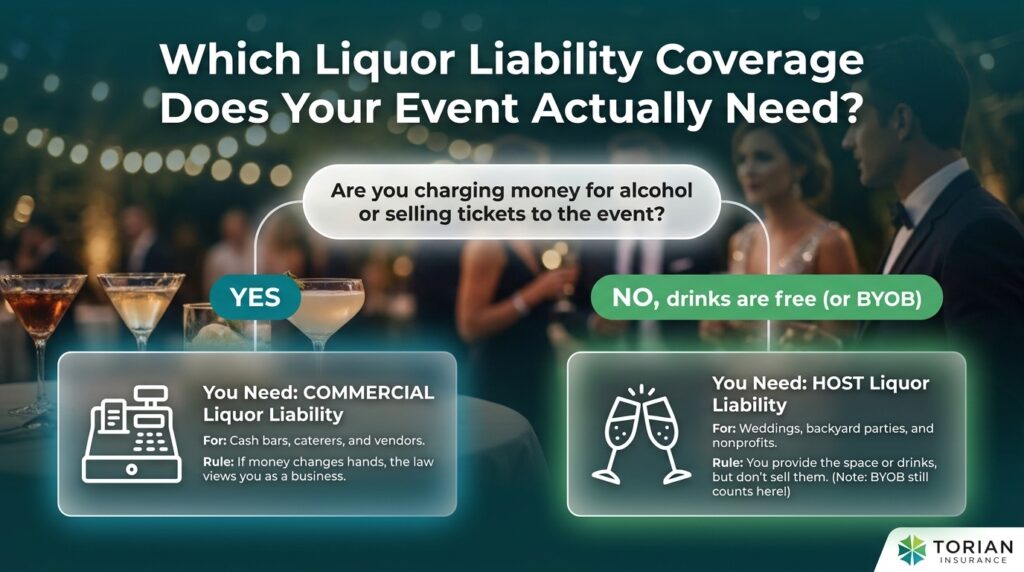
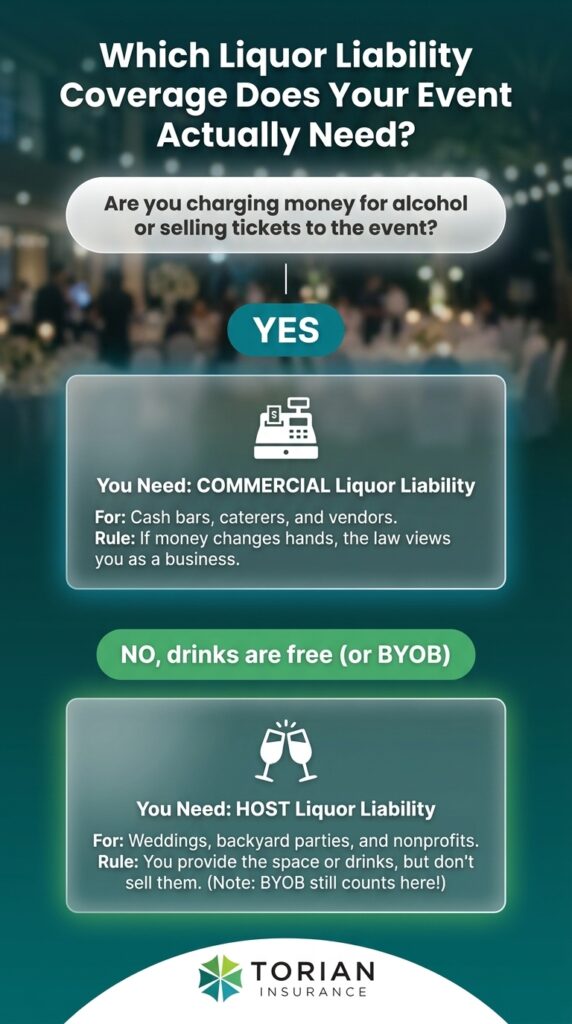
Host liquor liability applies when you serve or allow alcohol without selling it, such as at a private party or wedding. Commercial liquor liability applies when a business sells or serves alcohol for hire, such as a bar, caterer, or mobile bartender. The distinction comes down to whether money changes hands for the alcohol.
Social host liability, also called dram shop liability, describes the responsibility a non-commercial host can carry for a guest’s intoxication. The Insurance Information Institute describes it as “the criminal and civil responsibility of a person who furnishes liquor to a guest,” and notes that these laws exist in 43 states, including Indiana.
Here is how the two coverages line up:
- Host coverage: for individuals and organizations that provide alcohol at an event without selling it. This is the coverage most weddings, private parties, and hosted nonprofit events need.
- Commercial coverage: for businesses in the business of selling or serving alcohol, including caterers, mobile bartenders, and venues running a cash bar. This is a business coverage, not a host policy.
Indiana Event Liquor Liability Exposure Map
This map ties common Indiana event scenarios to how the state’s dram shop law treats them and where the responding coverage usually sits. Exposure in every row rests on the same two-part test: actual knowledge a guest was visibly intoxicated when served, and that intoxication being a proximate cause of harm to someone else.
| Event scenario | Who is furnishing | Indiana exposure (IC 7.1-5-10-15.5) | Where coverage typically sits |
|---|---|---|---|
| Private party at home where you provide or allow BYO alcohol | You, as social host | Yes. Liable if you had actual knowledge a guest was visibly intoxicated and that intoxication is a proximate cause of harm to a third party. | Homeowners liability, often $100,000 to $300,000, or a special-event host liquor policy for higher limits. |
| Wedding reception with an open bar | You or the couple, as host | Yes. An open-bar wedding is the classic social-host scenario the Act reaches. | Special-event or wedding liability policy. |
| Nonprofit fundraiser serving beer or wine | The organization, as host | Yes. A charity event serving alcohol can fall within the Act. | Special-event liquor liability for the organization. |
| Cash bar or ticketed event where alcohol is sold | You, as a seller | Yes, as a furnisher who sells. | Commercial liquor liability, not host coverage. |
| Mobile bartender or caterer serving for hire | The vendor, as a business | Yes, as a furnisher in the business of serving. | Commercial liquor liability. Host liquor liability generally will not respond for a business that serves for hire. |
| Renting a venue where a third party serves | The event holder; the venue requires proof | Yes for the furnisher. The venue also shifts risk to you by contract. | A COI naming the venue as additional insured, plus the appropriate host or commercial coverage. |
A few rows deserve attention. For weddings, a dedicated wedding liability policy is usually the cleanest fit, and for nonprofits, our guide to insuring nonprofit fundraisers covers the charity-event angle in more depth. Any time you rent a venue, expect to provide proof of coverage first.
How Indiana’s Dram Shop Law Applies to Event Hosts
Indiana’s dram shop law, found at Indiana Code 7.1-5-10-15.5, can make anyone who furnishes alcohol liable when an impaired person causes harm. “Furnish” is defined broadly to include barter, deliver, sell, exchange, provide, or give away, which is why the law reaches social hosts and event organizers, not only bars and restaurants.
The law does not make every host automatically liable. Liability attaches only when both of these are true:
- Actual knowledge of visible intoxication: You knew the person was visibly intoxicated at the time you served or provided the alcohol.
- Proximate cause: That intoxication was a proximate cause, meaning a direct and foreseeable cause, of the death, injury, or damage claimed.
This two-part test is a meaningful protection. A host who serves a guest showing no signs of intoxication is in a very different position from one who kept serving someone who was visibly drunk. Even so, the safest course is to manage service actively rather than rely on the test after the fact.
Indiana treats furnishing alcohol to minors far more strictly. For adult guests, liability runs through the two-part test above. Furnishing alcohol to anyone under 21 is illegal in Indiana regardless of intoxication, a separate and more serious exposure, so a firm no-underage-service rule is non-negotiable at any event. State enforcement guidance confirms that furnishing alcohol to an intoxicated person is a criminal offense, and that the provider can also face civil liability if injury or death results, even to a third party.
For Evansville and tri-state hosts, this is the rule that can turn a fun gathering into a lawsuit, and it is exactly why event-specific coverage exists.
Certificates of Insurance and Additional Insured for Event Venues
Most venues will not let you serve alcohol until you hand over a certificate of insurance (COI) that names the venue as an additional insured. A COI is a one-page document proving your coverage is active, and additional insured status extends your policy’s protection to the venue for claims arising from your event.
A venue’s insurance requirements usually specify:
- A minimum liability limit, commonly $1,000,000 per occurrence.
- The venue named as additional insured on the policy.
- Host liquor liability included when alcohol will be served.
- The COI submitted a set number of days before the event, often 14 to 30.
Requirements vary from one venue to the next. For a venue-by-venue breakdown of local requirements, see our Evansville wedding venue insurance guide. When your coverage is in place, you can start a certificate of insurance request and have the document sent directly to your venue.
What Liquor Liability Coverage Includes and Excludes
Liquor liability coverage generally pays for third-party bodily injury, property damage, and the legal defense costs tied to an alcohol-related incident at your event. It does not cover everything, and the exclusions are where hosts get surprised.
What it typically covers:
- Bodily injury to a third party caused by an intoxicated guest.
- Property damage caused by an intoxicated guest.
- Legal defense costs and settlements within your policy limits.
What it often does not cover:
- The intoxicated person’s own injuries. A social host is generally liable for harm to third parties, not to the guest who chose to drink.
- Fines, penalties, and criminal charges.
- Assault and battery or intentional acts, depending on the policy.
- Underage service, which many policies exclude or heavily restrict.
If you are relying on homeowners insurance alone, know that its liquor liability limits may not be enough for a large event with an open bar. Confirming your limit ahead of time, or adding a special-event policy, closes that gap.
A Practical Checklist for Serving Alcohol at Your Event
Good planning lowers both the odds of an incident and your liability if one happens. Use this checklist before, during, and after any event where alcohol is served.
Before the Event
- Confirm whether your homeowners policy includes liquor liability and at what limit, or secure a special-event policy.
- Request any COI your venue requires and name the venue as additional insured.
- Consider hiring a licensed, insured bartender who is trained to recognize visible intoxication.
- Plan safe rides, including rideshare information, designated drivers, or overnight options.
During the Event
- Serve food and non-alcoholic options throughout the event.
- Stop serving anyone who appears visibly intoxicated.
- Never serve anyone under 21, and check IDs when in doubt.
- Set a last call and close the bar before the event ends.
After the Event
- Arrange transportation for any guest who should not drive.
- Keep your COI and policy documents on file.
- Note any incidents and contact your agent promptly if a claim may arise.
How Torian Insurance Helps
As an independent agency based in Evansville, we work for you, not a single carrier. When you are planning an event, we shop coverage across multiple insurance companies to find a host liquor liability or special-event policy that fits the size, setting, and guest count of your gathering. Because we are local, we understand how Indiana’s dram shop law and area venue requirements actually play out.
We can review whether your existing homeowners policy already responds, help you request a certificate of insurance for a venue, and make sure the venue is named as additional insured. Torian Insurance has served Southwestern Indiana families and businesses for more than 100 years and is licensed in Indiana, Kentucky, and Illinois. If you have an event on the calendar, we are glad to walk through your options.
Frequently Asked Questions About Liquor Liability Insurance for Events
Do I need liquor liability insurance for a BYOB party?
Often, yes. Allowing guests to bring their own alcohol does not remove your responsibility as the host. If you organize the event and control the setting, Indiana’s dram shop law can still reach you. Check whether your homeowners policy includes liquor liability, and consider a special-event policy for larger gatherings.
Am I liable if a guest drinks at my party in Indiana and then causes an accident?
You can be, but only under specific conditions. Under Indiana Code 7.1-5-10-15.5, you are liable only if you had actual knowledge the guest was visibly intoxicated when you served them and that intoxication was a proximate cause of the accident. A guest who showed no signs of intoxication generally does not create host liability.
Does homeowners insurance cover liquor liability in Indiana?
Usually to a limited degree. Many homeowners policies include some liquor liability coverage, typically $100,000 to $300,000. That can be enough for a small gathering but may fall short for a wedding or large party with an open bar. Ask your agent to confirm your limit and whether a separate event policy makes sense.
Are social hosts liable under Indiana’s dram shop law?
Yes, social hosts can be liable, not just bars. Indiana defines furnishing alcohol broadly enough to include private hosts who serve or provide drinks. Social host liability, also called dram shop liability, applies when a host serves a visibly intoxicated guest who then harms someone else.
How much does event liquor liability insurance cost?
Cost varies with the event, so no honest single price exists. The main drivers are the number of guests, the length of the event, and whether alcohol is sold or simply served. A small hosted gathering costs far less to insure than a large ticketed event with a cash bar. A local agent can price it against your specific details.
Talk to a Local Agent About Your Event Coverage
Serving alcohol at an event should be about celebrating, not worrying about a lawsuit. The right coverage lets you host with confidence, whether it is a backyard party, a wedding, or a nonprofit fundraiser. Understanding how Indiana’s dram shop law applies is the first step, and matching it to the right policy is the second.
If you have an event coming up, the team at Torian Insurance can review your situation and help you find coverage that fits. Learn more about event insurance for weddings, festivals, and private parties, or reach out to Torian Insurance to talk through your specific plans.